Duvet
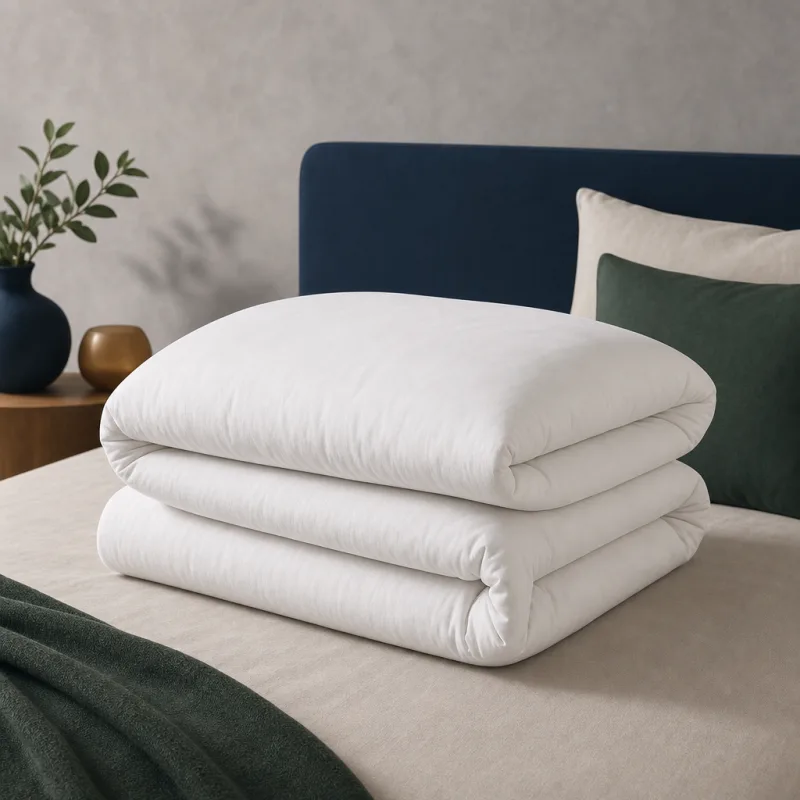
Replace a duvet or comforter every 5 to 10 years depending on the fill. Down lasts longer, synthetic loses its loft sooner.
Replace every 5 to 10 years, depending on fill
With a duvet it is not about spoilage but about wear and hygiene. As a rule of thumb, you should replace a duvet every five to ten years. Quality down duvets, with good care, last toward the upper end of this range, while synthetic ones usually lose loft and warmth sooner. What counts is the state of the fill, not age alone. Down or synthetic is on the label; how good the down is, is not — a composition line names the fibre class, not the grade.
Over the years, sweat, skin flakes and moisture collect in a duvet, giving dust mites an ideal habitat. Their droppings are a common allergy trigger. So besides replacing, regular cleaning also matters: most duvets should be washed once or twice a year per the care label, provided the machine is large enough.
Another sign of a duvet due for renewal is the loss of loft. If the fill clumps, shifts within the chambers or forms cold spots, the duvet no longer warms evenly and sleep comfort suffers. Stubborn discoloration or smells that washing no longer removes also call for a replacement.
The duvet is not to be confused with the bedding cover, which as a cover is changed far more often. A good, breathable cover and an additional encasing or protector shield the duvet, extend its life and make daily life easier for allergy sufferers. Regular shaking and airing outdoors keeps the fill lofty longer.
How do I spot a duvet due for renewal?
Several signs point to a new duvet:
If the fill clumps or shifts, the duvet warms unevenly.
Cold spots and fading loft show the duvet is tired.
Lasting smells or increasing allergy symptoms call for a replacement.
Lifespan at a glance
The fill sets the lifespan:
| Fill | Lifespan |
|---|---|
| Down/feather (cared for) | 8–10 years |
| Natural fiber | about 5–8 years |
| Synthetic | about 5 years |
| Clumped / cold spots | replace |
Care & use longer
This keeps the duvet good longer:
Wash regularly — once or twice a year per the care label.
Air & shake — air outdoors so the fill stays lofty.
Use a protector — an encasing shields against sweat and mites.
Replace every few years — buy a new duvet when the fill clumps.
Common myths
A few myths surround the duvet:
No — fill and warmth fade; a change every 5 to 10 years makes sense.
No — the bedding is the cover and is changed far more often.
They can — most may go in a large enough machine per the care label.
For dust-mite allergy sufferers, special encasing covers and duvets washable at 140 °F are especially useful, because that temperature reliably kills mites. If you have no large machine, many duvets can be cared for at a laundromat with bigger drums — regular airing does not replace washing but keeps the fill fresh and lofty in between. When buying a new duvet, it pays to look at the right warmth class: light summer duvets, warmer all-year duvets and thick winter duvets cover different needs, and some systems can be combined with snap fasteners. If you sweat easily at night, breathable natural fibers are better, while allergy sufferers often do better with washable synthetic fills.