Mattress
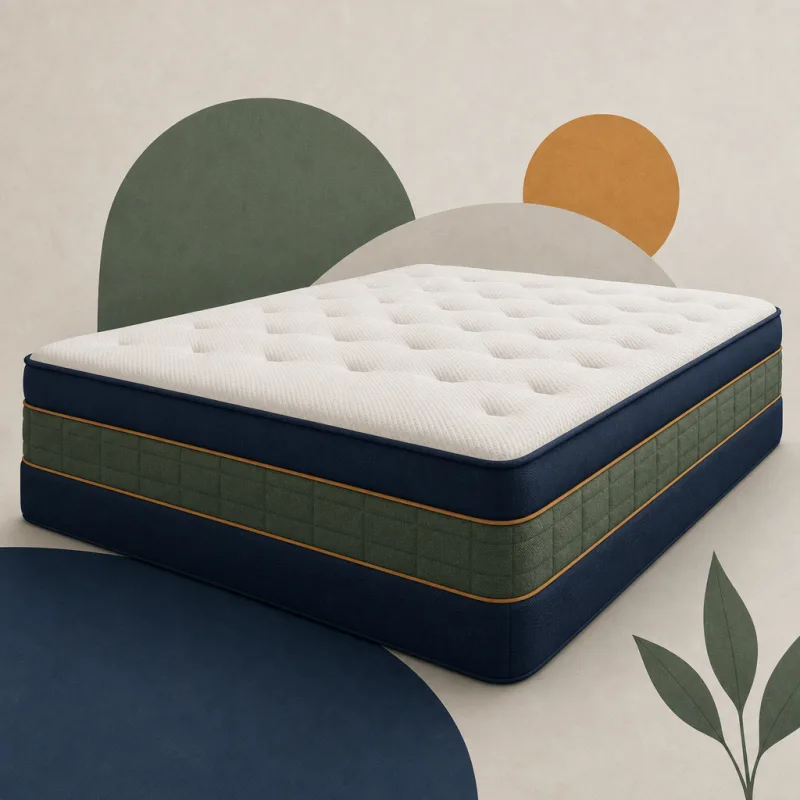
A mattress lasts on average 7 to 10 years. After that the support noticeably fades — replace it by then, or sooner if you wake up with a sore back.
Why a mattress ages
A mattress works every single night: it carries your body weight, cushions your movements and has to wick away moisture. Over the years the materials inevitably tire. Foam loses its bounce, springs sag, and permanent body impressions form — usually first where the load is greatest, around the hips. Once the support fades there, your spine no longer rests in a healthy line, and you feel it in the morning as back or neck pain and the sense that you never quite slept well.
Hygiene adds to it. Every night your body sheds moisture and skin cells that dust mites feed on, and over the years a surprising amount builds up inside an old mattress. For allergy sufferers that alone is a good reason not to wait too long. As a rule of thumb, replacement makes sense after seven to ten years — sooner if you see sagging or your sleep gets worse.
How do I know it is worn out?
Your body and a quick check tell you when a mattress has reached the end of its life. Three signs are unmistakable:
Permanent body impressions that do not spring back after you get up are the clearest sign. Lay a straightedge across it — a dip of more than about an inch is too much.
If you sleep worse than you used to and wake up stiff, with nothing else changed, the fading support is usually to blame.
A musty smell, stains or stronger allergy symptoms point to trapped moisture and mites that airing can no longer fix.
Lifespan by type
Not every mattress lasts the same — the material matters. This table shows typical figures:
| Mattress type | Typical life |
|---|---|
| Memory foam | 7–10 years |
| Innerspring / pocket coil | 7–10 years |
| Latex | up to 12–15 years |
| Hybrid | 7–10 years |
| Budget / kids mattress | 5–7 years |
Make it last longer
A few simple habits keep any mattress supportive and hygienic for longer:
Rotate regularly — swap head and foot every few months (flip only if the model is two-sided).
Let it breathe — pull the covers back each morning so overnight moisture can escape.
Use a supportive base — a sound foundation or slats keeps the mattress from sagging early.
Add a washable protector — it keeps moisture and mites out and can be washed warm.
Common myths
A few mattress myths either cost you money too soon or keep you on a worn-out bed too long:
No — even premium models lose support after about a decade. Price extends life only so far.
Rotating helps but is no substitute. Once the material is fatigued, turning it does nothing.
Often it does — a sagging mattress lets your spine settle into an unhealthy position overnight.
Do not just toss an old mattress in the trash — most areas have bulky-waste pickup or recycling, and many retailers haul the old one away free when you buy a new one. Tip — write the purchase date on the care label so you know its real age years from now.