Bike Helmet
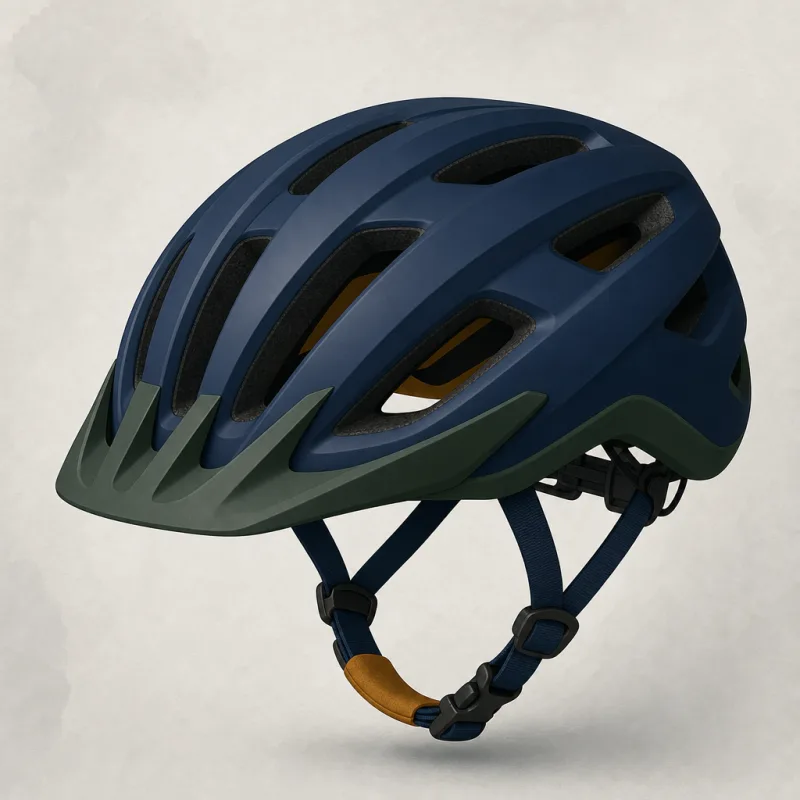
Replace a bike helmet after about 5 years — and always right after a crash, even if it looks undamaged from the outside.
Why a helmet does not last forever
A bike helmet protects by letting its hard foam liner (usually EPS) crush on impact and absorb the energy. That is the key: the foam is designed for a single hard hit. After a crash it is compressed inside — even if the outside looks fine — and it will not reliably protect you next time. So the most important rule is simple: replace the helmet after any impact.
Even without a crash, a helmet ages. UV light, sweat, heat in a car and everyday knocks make the shell and foam brittle over the years. Manufacturers and safety groups recommend replacing a helmet after about five years — sooner with heavy use or visible damage.
Replace immediately after a crash
This is what sets a helmet apart from most other items: one that has taken a hard hit must be replaced — right away, whatever its age. The EPS foam deforms permanently on impact and will not cushion a second one. Even if the shell and pads look flawless, the protection inside may be gone. Never trust appearances here. A helmet that has fallen hard onto pavement from a height should also be replaced if in doubt.
How do I know it needs replacing?
Beyond the clear "after a crash" rule, several signs call for a new helmet:
Fine cracks in the shell, dents in the foam or a shell separating from the liner are clear warning signs.
Frayed straps or a sticky, brittle buckle — if the helmet no longer sits securely, it cannot protect you.
Check the date inside. If it is more than about five years old, it is time for a new one.
When to replace — overview
Here are the typical cases at a glance:
| Situation | Recommendation |
|---|---|
| After any crash / impact | replace immediately |
| Over 5 years old | replace |
| Cracks, dents, loose shell | replace |
| Strap / buckle failing | replace |
| Regular use, no damage | inspect yearly |
Keep it protective: handle it right
A helmet keeps its full protection longer if you treat it well:
Do not leave it in a hot car — heat makes the EPS foam brittle.
Do not drop it — falls from the handlebars or a table can damage the foam too.
Clean gently — water and mild soap only; solvents attack the material.
Store dry and out of the sun — constant sunlight ages plastic and foam.
Common myths
With helmets, wrong assumptions can be dangerous:
Wrong — after an impact the foam can be crushed inside with nothing showing outside.
No — pricey helmets age too and must be replaced after a crash. Price changes nothing here.
Not necessarily — surface scratches are harmless. What matters is cracks, dents and crashes.
The manufacture date is usually stamped inside the helmet as a small clock graphic. When buying new, look for a CPSC certification sticker — it is required for bike helmets sold in the US and guarantees a tested minimum level of protection.