Smoke Detector
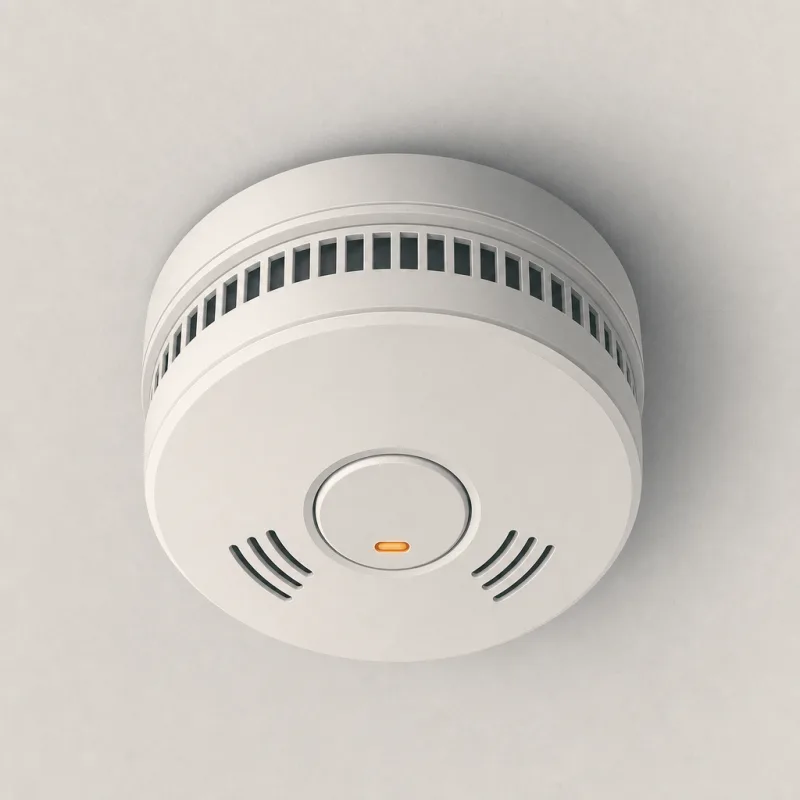
Smoke detectors must be replaced completely after 10 years — not just the battery. The sensor ages and becomes unreliable over time.
Why exactly 10 years?
A smoke alarm watches the air with a sensing chamber that holds a small light source and a sensor. Over the years dust, dirt and aerosols settle inside that chamber, and the electronics age. The alarm becomes less reliable — it may respond late, fail to sound, or start giving false alarms. Cleaning helps only so much, because the aging of the components cannot be undone.
Why this matters becomes clear in a real fire: a house fire often builds silently at night, and most fire deaths come not from the flames but from breathing toxic smoke while asleep. A working alarm buys the few seconds you need to wake up and get out. A ten-year-old, dust-clogged alarm can lose exactly those seconds — which is why timely replacement is not a formality but a matter of safety.
That is why fire-safety guidance (NFPA 72) sets the working life of a smoke alarm at ten years from the manufacture date. After that the whole unit is replaced — not just the battery. Many modern alarms come with a sealed 10-year lithium battery matched to exactly that lifespan.
How do I know it needs replacing?
A smoke alarm usually tells you when something is wrong. Take these signs seriously and, when in doubt, act one step early:
The manufacture date is on the back. Ten years after that, replace it — write the install date on the housing so you remember.
A short chirp every minute usually means a low battery, or the end of life on a sealed-battery unit.
Press the test button. If no loud alarm sounds, the unit is faulty and must be replaced right away.
When to replace — overview
This table shows which step is due when:
| Situation | Recommendation |
|---|---|
| Reached 10 years old | replace the whole unit |
| Replaceable battery low (chirp) | change the battery |
| Test button, no alarm | replace immediately |
| Visible damage / yellowed | replace |
| After a fire or smoke exposure | replace |
Maintain it right
To make sure the alarm sounds when it counts, it needs a little regular care:
Test monthly — press the test button once a month until the alarm sounds.
Change batteries yearly — on replaceable-battery units at least once a year, or at the first chirp.
Dust it gently — vacuum the outside now and then so the smoke openings stay clear.
Place it right — on the ceiling, in or near every bedroom and on every level of the home.
Common myths
With smoke alarms, wrong assumptions can cost lives:
Wrong — after ten years the sensing chamber is worn out. No battery fixes that; the whole unit must go.
Better not — cooking fumes cause false alarms. Use a dedicated heat alarm for the kitchen instead.
No — fire safety guidance calls for an alarm in every bedroom, outside each sleeping area and on every level.
Interconnected alarms are the safest setup: when one senses smoke, they all sound, so you hear it anywhere in the home. When buying, look for a UL mark — it shows the alarm has passed independent safety testing. And do not forget a separate carbon-monoxide alarm near sleeping areas.