Pillow
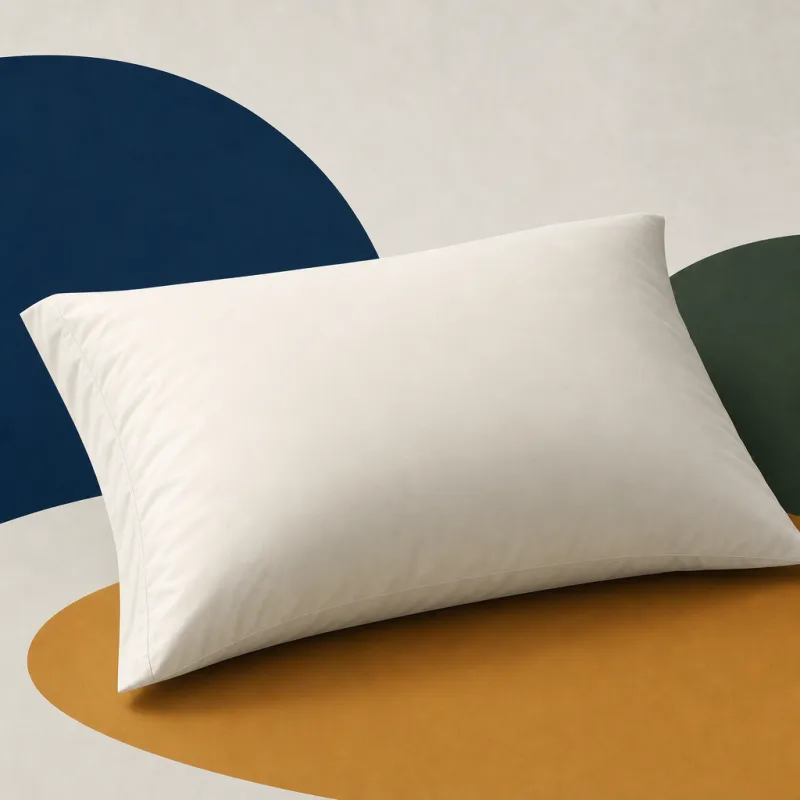
A pillow lasts 1 to 3 years — depending on the material. If it does not spring back after folding, or supports less well, it is time for a new one.
Support and hygiene set the limit
You replace a pillow not because it breaks but because it loses two things: support and hygiene. Over time the fill flattens, the pillow supports the head and neck less well, and morning stiffness can be the result. Depending on the material, a pillow lasts one to three years. Which material that is stands on the label — and what a composition label does and does not tell you is worth knowing before the next purchase.
The material decides: simple polyester pillows lose their shape fastest and often last only one to two years. Quality pillows of latex, memory foam or good down are more shape-stable and reach two to three years or more. Either way, over time sweat, skin flakes and thus dust mites build up — a hygiene reason for regular replacement, especially for allergy sufferers.
A simple test tells you whether a pillow is done: the fold test. Fold the pillow in half and let go. If it springs back into shape at once, it still has enough resilience. If it stays folded or rights itself only sluggishly, the fill is fatigued and the pillow should be replaced. With feather and down pillows the test works especially well.
Lifespan can be extended by protecting and caring for the pillow. A washable encasing or protector under the actual pillowcase keeps most sweat and mites away from the fill. Many pillows can also be washed — a regular wash per the maker instructions refreshes the hygiene, but does not restore lost support.
How do I spot a worn-out pillow?
A tired pillow shows it through shape and hygiene:
The pillow no longer springs back after folding, but stays down.
The fill has clumped or permanently flattened, and the height is uneven.
Yellowish sweat stains or a musty smell despite washing are a hygiene signal.
Lifespan at a glance
The fill material sets the window:
| Material | Lifespan |
|---|---|
| Polyester pillow | 1–2 years |
| Down/feather | 2–3 years |
| Latex/memory foam | 2–3 years and more |
| Fails the fold test | replace |
Use longer & care
This keeps a pillow supportive and hygienic longer:
Use a protector — a washable encasing keeps sweat and mites off the fill.
Wash regularly — washable depending on material; follow the maker instructions.
Fluff and air — daily fluffing keeps the shape longer.
Keep it dry — damp fill encourages mites and mould.
Common myths
A few myths surround pillows:
No — support and hygiene fade long before a hole appears.
Only partly — clumped or flat fill does not regain support even when clean.
Even quality pillows lose shape and hygiene after a few years.
Retired pillows can often be reused, for instance as a pet bed, a kneeling pad for gardening or as stuffing material. Pure down and feathers are also good for recycling; some businesses take them back. As a rule of thumb: if you often unconsciously scrunch or fold a flat pillow at night to gain height, you have usually already passed the replacement point. A good pillow supports the neck without help. Allergy sufferers benefit from an earlier change and a washable mite-proof cover to keep dust down.