Running Shoes
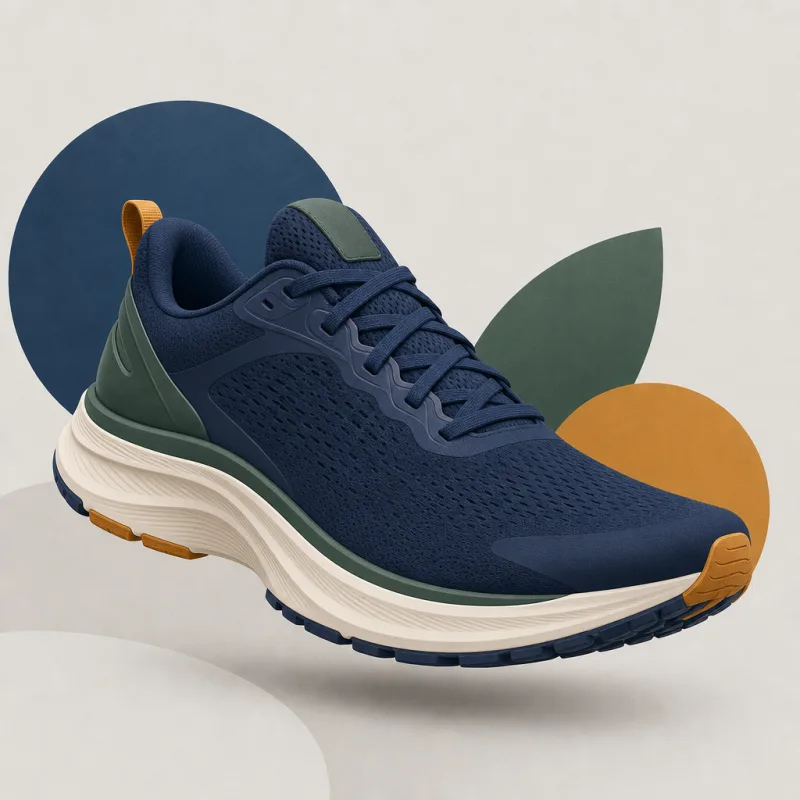
Running shoes last by mileage, not time — usually 300 to 500 miles. After that the cushioning is spent, even if the sole still looks fine.
Count miles, not months
Running shoes are measured not in months but in miles. The EVA-foam midsole cushions every step, but gradually loses its ability to bounce back. After about 300 to 500 miles the cushioning is so fatigued that joints and muscles take more strain — often long before the tread or upper look visibly worn.
How fast that limit is reached depends on the runner: weight, running style, surface and the shoe design all play a part. A heavy runner on asphalt wears the cushioning faster than a light one on soft forest trails. As a rough time span: heavy runners replace every few months, occasional runners get one to two years out of a pair.
Unworn running shoes age too. The foam and glue undergo slow chemical ageing (hydrolysis) over the years; after about eight to ten years in the closet the sole can turn brittle or start to separate. A bargain from last year is fine, but a ten-year-old clearance pair no longer necessarily is.
If you do not want to leave wear to chance, simply track the miles — most running apps and sports watches have a shoe-mileage function. Another trick: rotate two pairs of running shoes. The cushioning recovers a little between runs, and both pairs together last longer than a single pair run without a break to the very end.
How do I spot worn-out running shoes?
Wear often shows up first in your body:
The shoe feels flat and hard, the springy feeling of before is gone.
Shins, knees or feet hurt after running with no other obvious cause.
The tread is worn down on one side and the shoe tips over on a flat surface.
Lifespan at a glance
Mileage and runner type set the limit:
| Use | Lifespan |
|---|---|
| Regular training | 300–500 miles |
| Heavy runners | every few months |
| Occasional runners | 1–2 years |
| Unworn (storage) | about 8–10 years |
Use longer & care
This keeps running shoes cushioned longest:
Track the miles — via app or a note, so wear does not surprise you.
Rotate two pairs — the cushioning recovers between runs and both last longer.
Air-dry — never on a radiator; heat breaks down glue and foam.
For running only — do not use them as everyday shoes; that costs cushioning.
Common myths
A few myths surround running shoes:
No — the cushioning fatigues inside, long before anything shows outside.
Not necessarily — even high-end cushioning fatigues after 300 to 500 miles.
No — foam and glue age over the years even unworn.
Retired running shoes are not worthless: for walks, gardening or as everyday shoes they carry on serving, they just are not fit for run training any more. Many sports stores and makers also take old shoes back for recycling. A word on safety: running on with noticeably faded cushioning risks overuse pain in the Achilles tendon, shins and knees. Replacing in time is therefore not just about comfort but helps prevent injury — when a pair nears the 300-mile mark, it is worth lining up the next one.