Bed Sheets
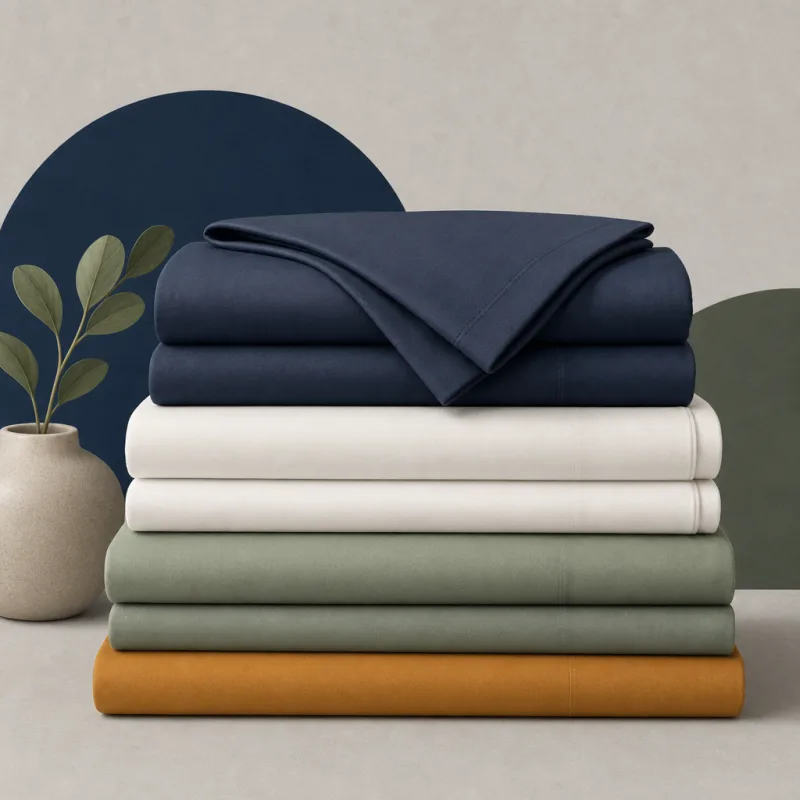
Change bed sheets every 1 to 2 weeks. Overnight, sweat, skin flakes and mites build up — more often in heat, illness or with allergies.
Why regular changing matters
You change bed sheets for hygiene about every one to two weeks. In a single night the body gives off sweat, oil and skin flakes — and those skin flakes are exactly the food for dust mites, which thrive in a warm, moist bed. Fresh sheets make for a more pleasant feel and a more hygienic sleep environment.
Exactly how often depends on the circumstances. One to two weeks is the guideline; change more often if you sweat heavily at night, in summer heat, after a cold or illness, with a dust-mite allergy, or if pets sleep in the bed. If you sleep naked or unshowered, more often is better too.
An often underrated special case is the pillowcase. It touches the face and hair directly and picks up skin oil, hair products and saliva. If you are prone to breakouts or acne, it helps to change the pillowcase more often than the rest — about every two to three days.
When washing, it is not just frequency that matters but temperature. To remove dust mites and germs effectively, wash sheets as hot as the fabric allows, ideally around 130 °F (60 °C). Delicate fabrics are washed cooler but a little more often. Thoroughly dried laundry matters, because residual moisture encourages mites and mould again. Which temperature a set tolerates follows from the fibre, and the fibre is the one thing the label does state reliably — how far a composition line actually goes.
How do I know it is time to change?
Usually time decides, not appearance:
One to two weeks is the simplest guideline, regardless of how clean the sheets look.
If the laundry smells musty or shows stains, the change is overdue.
Itching, morning sneezing or breakouts point to sheets changed too rarely.
Change interval at a glance
Circumstances set how often:
| Situation | Change |
|---|---|
| Normal case | every 1–2 weeks |
| Heavy sweating / summer | weekly |
| Illness / allergy / pet in bed | more often, weekly |
| Pillowcase (acne-prone skin) | every 2–3 days |
Keep it hygienic
This keeps the bed pleasant and hygienic:
Change every 1–2 weeks — a fixed rhythm keeps the bed hygienic.
Wash hot (130 °F) — hot washing kills mites and germs where the fabric allows.
Dry well — residual moisture encourages mites and mould.
Air the mattress and pillows — let them air briefly when you change.
Common myths
A few myths surround bed sheets:
No — sweat, flakes and mites are invisible; one to two weeks is the guideline.
For mites and germs, hot washing at 130 °F is far more effective.
You sweat at night in winter too; the rhythm stays similar.
Not only the sheets but the mattress and pillows need care. A washable mattress and pillow protector keeps sweat and mites off the fill and washes easily alongside. The mattress itself should be aired regularly and turned occasionally. That way the whole bed stays hygienic and fresh for longer. An extra tip: having two sets to rotate makes regular changing easier, as a fresh one is always ready while the other is in the wash. Heavy night sweaters can add an absorbent mattress pad under the sheet and wash it more often.