Spark Plugs
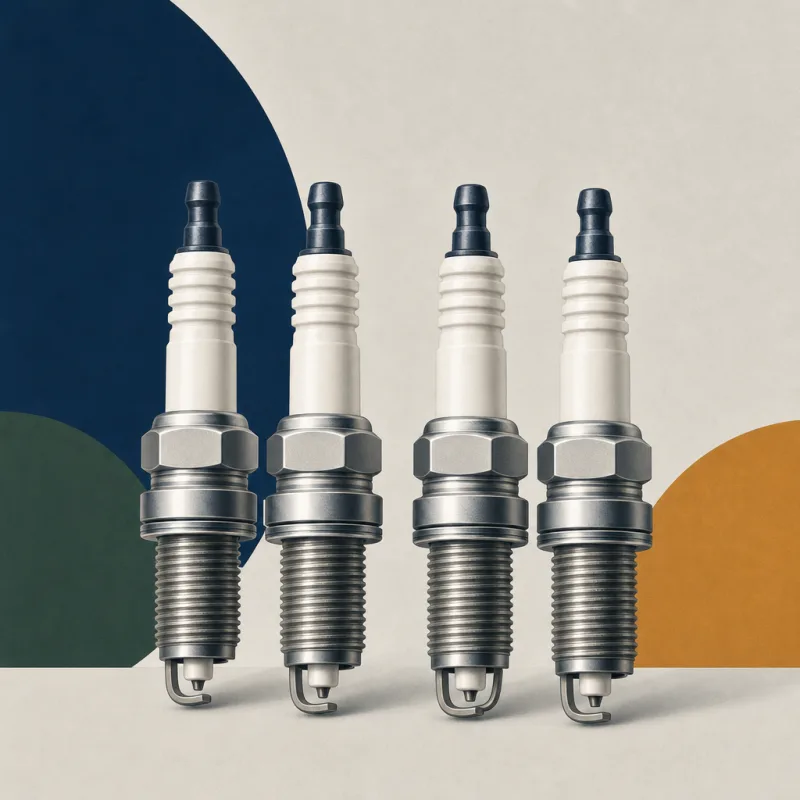
Change spark plugs every 30,000 to 100,000 miles depending on type. Simple copper plugs sooner, modern iridium and platinum plugs much later.
Depending on plug type, 30,000 to 100,000 miles
How often you need to change spark plugs depends heavily on the type fitted. Simple copper plugs are usually due after around 30,000 miles, while modern platinum and iridium plugs last 60,000 to 100,000 miles, and some long-life plugs even longer. What always governs is the vehicle maker spec in the service book — it gives both the mileage and the time interval.
Spark plugs are a classic wear part. At every ignition a spark jumps the small gap between the electrodes and ignites the fuel-air mixture. Over time the electrodes erode, the gap widens and the spark weakens. The result is a rough-running engine, higher fuel use and, in the worst case, misfires that can also damage the catalytic converter.
Worn plugs often announce themselves with noticeable symptoms. The engine runs unevenly or hesitates, starts harder, uses more fuel and the check-engine light may come on due to misfires. If you notice these signs, have the plugs checked and replaced soon, before secondary damage occurs.
When changing: always renew the complete set, not individual plugs, and use only the plug type with the correct heat range specified by the maker. A wrong plug can cause pre-ignition or deposits. On modern plugs the electrode gap is correctly set from the factory; what matters is the right tightening torque, so the plug is neither loose nor strips the thread.
How do I spot worn spark plugs?
Several symptoms point to due plugs:
Hesitation, idle vibration or power dips point to weak sparks.
If the engine starts noticeably worse in the morning, the plugs are often to blame.
Rising fuel use or the check-engine light from misfires are serious signals.
Interval by plug type
The material sets the lifespan:
| Plug type | Interval |
|---|---|
| Copper (standard) | about 30,000 miles |
| Platinum | 60,000–90,000 miles |
| Iridium | up to 100,000 miles |
| Hesitation / misfire | have checked |
Check & change
This keeps ignition reliable:
Follow the maker spec — keep the interval from the service book.
Change the full set — never single plugs, always all together.
Right plug type — use only the specified heat range.
Correct torque — tighten firmly but not overtightened.
Common myths
A few myths surround spark plugs:
No — even iridium plugs are due after around 100,000 miles at the latest.
No — always the complete set, or the engine runs unevenly.
No — heat range and design must match the maker spec exactly.
The plug's appearance tells experts a lot about engine condition: a tan-brown insulator tip means clean combustion, while a black, sooty deposit points to a too-rich mixture and a light, glassy deposit to excessive temperatures. When changing, it is worth a checking glance at the old plugs before they are discarded. If you change the plugs yourself, let the engine cool before the work and clear dirt from the plug wells before unscrewing, so no particles fall into the combustion chamber. When fitting the new plugs, a torque wrench helps keep the maker's specified tightening figure — overtightened plugs can damage the thread in the cylinder head, loose ones cause compression loss and misfires.