Brake Pads
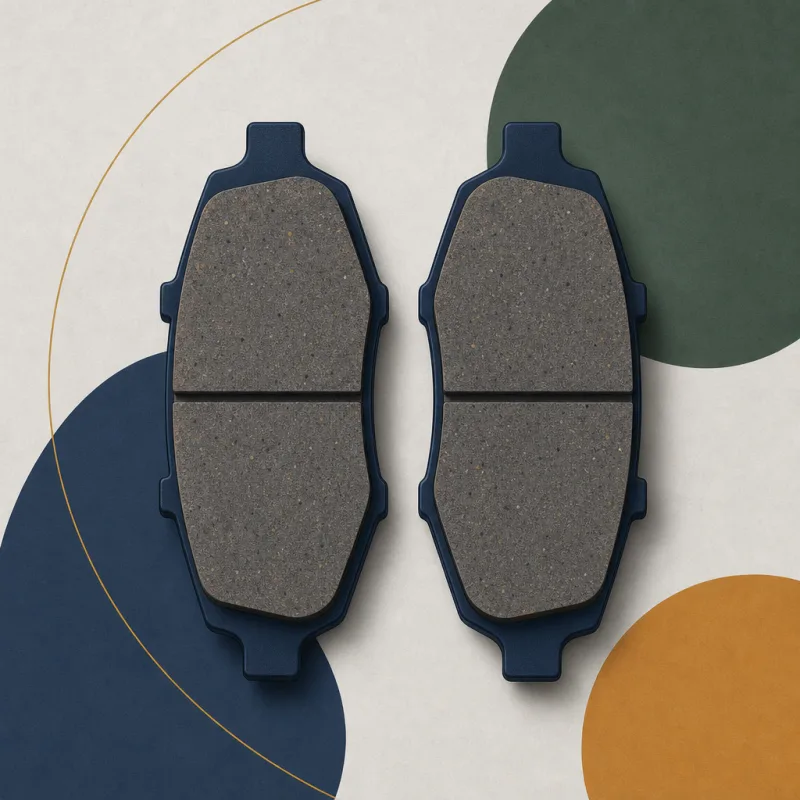
Brake pads last 30,000 to 70,000 miles depending on driving. Squealing, a longer stopping distance or the warning light are signals to check.
Wear depends heavily on driving
Brake pads are a wear part and a little is worn away with every brake. How long they last depends above all on driving style — as a rough range, 30,000 to 70,000 miles. Lots of city driving with frequent braking, or sporty driving, wears the pads faster than mostly steady highway cruising.
Because brakes are safety-critical, you should not push the wear to the limit. Most vehicles have a wear indicator: either a small metal tab that produces an audible squeal once the pad is thin, or an electronic sensor that triggers a dashboard warning light. Both are a prompt to have the brakes checked at a shop soon.
It gets dangerous if you ignore these signals. Once the pad is fully worn, the metal backing plate grinds directly on the brake rotor. That produces a metallic grinding noise, lengthens the stopping distance and damages the expensive rotor, which then has to be replaced too. A timely pad change is much cheaper.
Pads and rotors form a system and are often looked at together: rotors usually last about two pad changes, so they are due less often. At each major service the shop measures the remaining pad thickness; a typical minimum is around 2 to 3 millimeters, below which a change is due. The front and rear axles wear at different rates.
How do I spot worn brake pads?
Worn pads usually give clear warning:
A high squeal from the wear indicator appears once the pad gets thin.
A brake warning light or a noticeably longer stopping distance are serious signals.
A metallic grinding means the pad is gone — get to a shop at once.
Lifespan at a glance
Driving style and route set the wear:
| Use | Lifespan |
|---|---|
| Mixed | 30,000–70,000 miles |
| Lots of city / sporty | shorter |
| Mostly highway | longer |
| Squealing / warning light | have checked |
Check & drive safely
This keeps the brakes reliable:
Have wear checked — measure the remaining thickness at each service.
Take signals seriously — do not ignore squealing and the warning light.
Do not drive to the metal — or the rotor gets damaged too.
See pads and rotors together — replace both together if needed.
Common myths
A few myths surround brake pads:
No — driving style matters a lot; city driving wears them much faster.
No — it is the wear indicator and a clear signal to have them checked.
No — by then the pad is gone and the rotor is expensively damaged.
Driving style strongly affects lifespan: anticipating traffic and lifting off the gas early, and on electric and hybrid cars using regenerative braking (braking through the motor), spares the pads considerably. In many EVs the pads therefore last many times longer than in comparable gas cars. The quality of the pads matters too: cheap pads often wear faster and can run louder or with more brake dust, while quality pads together with matching rotors offer a balanced mix of lifespan, braking power and comfort. When in doubt, have pads and rotors assessed together at the next service and replace them by axle rather than mixing individual parts.