Engine Coolant
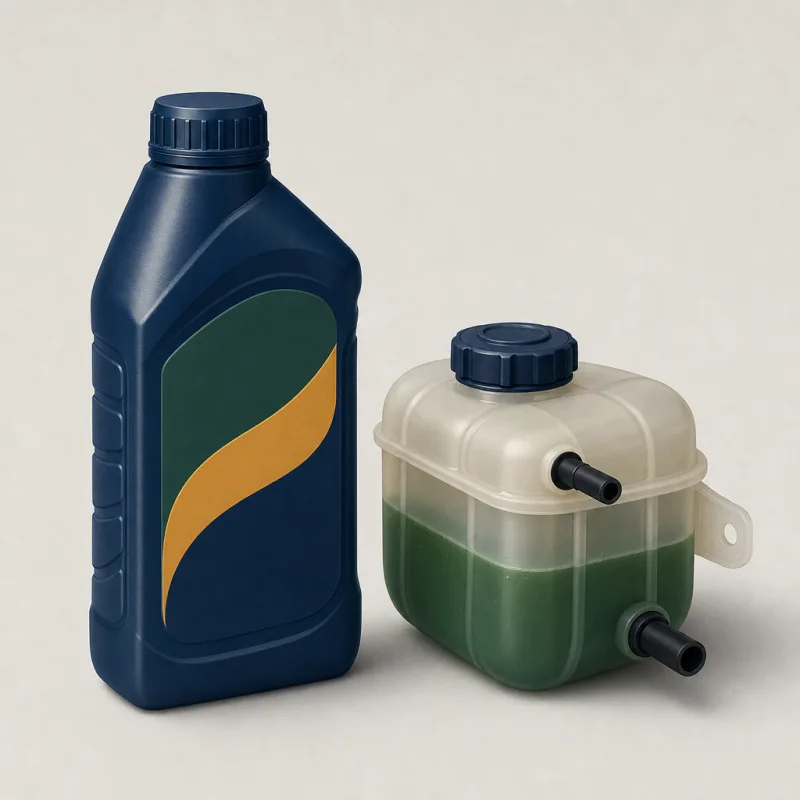
Change engine coolant every 2 to 5 years depending on type. Conventional coolant sooner, long-life coolant much later — per the maker spec.
Depending on coolant type, every 2 to 5 years
Engine coolant is a mix of water and antifreeze and must be renewed regularly. How often depends on the type: conventional coolants are often due every two to three years, while modern long-life coolants last up to five years or around 100,000 miles. What always governs is the vehicle maker spec in the service book.
The coolant does several jobs. It carries engine heat to the radiator, protects against freezing in winter and boiling over in summer, and contains corrosion-inhibiting additives that prevent rust and deposits in the cooling system. These very additives get used up over time — so old coolant loses its protective effect even if visually everything still looks fine.
You can check the coolant level yourself at the reservoir in the engine bay — but only with a cold engine, since the system is under pressure and hot fluid can spray out dangerously. The level should sit between the minimum and maximum marks. A steadily dropping level points to a leak and belongs at a shop.
When topping up, the right coolant type is decisive. The color (such as blue, green, pink or purple) marks the chemical composition; different types should not be mixed, or flakes form and the corrosion protection suffers. In an emergency you can briefly top up with clean water, but the mixture ratio should then be set correctly again soon.
How do I spot old or low coolant?
Several signs point to a change or check:
If the level at the reservoir is below minimum, coolant is missing.
Cloudy, rusty or flaky coolant has lost its protection.
If the temperature gauge rises, low or old coolant can be the cause.
Change interval at a glance
The coolant type sets the interval:
| Coolant type | Interval |
|---|---|
| Conventional | every 2–3 years |
| Long-life | up to 5 years / 100,000 mi |
| Per spec | follow service book |
| Cloudy / engine hot | have checked |
Check & top up
This keeps the cooling system reliable:
Check only cold — never open the reservoir on a hot engine.
Top up the right type — mind color and maker approval, do not mix.
Change per spec — keep the interval from the service book.
Take a leak seriously — a dropping level belongs at a shop.
Common myths
A few myths surround coolant:
Only in an emergency — long term it lacks freeze and corrosion protection.
No — different types can flake and destroy the protection.
It does — the protective additives get used up and must be renewed.
Antifreeze protects not only against freezing but also raises the boiling point, so the engine does not boil over so easily in summer — coolant diluted too much with water loses both properties. Coolant is also toxic and sweet-tasting, which is why it must be stored out of reach of children and pets and disposed of properly. Another important point is the antifreeze concentration: it can be measured with a simple tester or test strip and should, depending on region, protect down to about minus 15 to minus 30 degrees Fahrenheit. Having the antifreeze checked in fall avoids frost damage to the engine block in winter. Modern coolant also protects aluminum parts from corrosion, which is why the right approved type matters so much.