Timing Belt
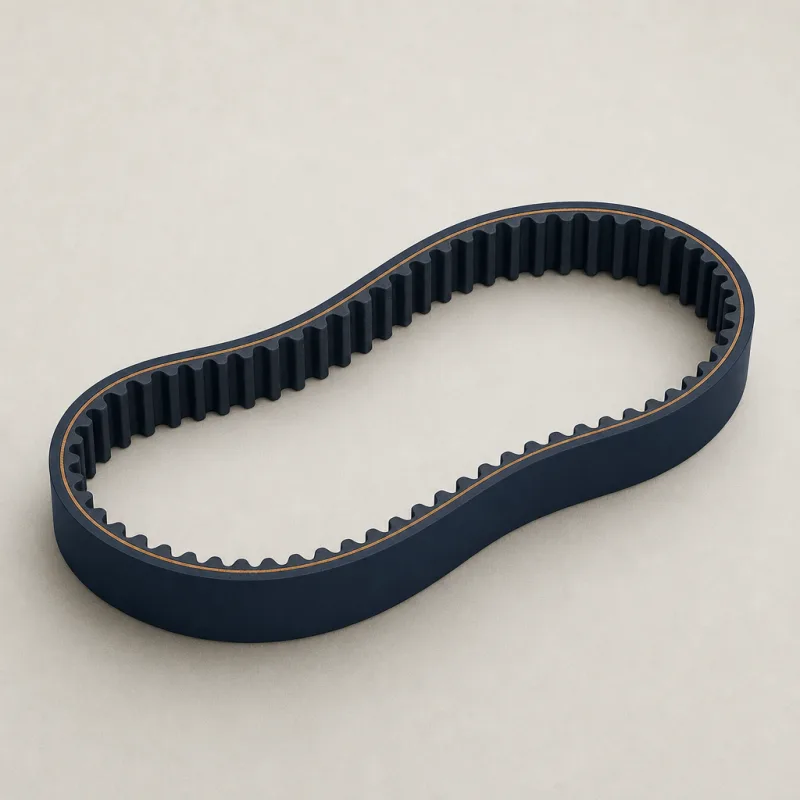
A timing belt is usually replaced at 60,000 to 100,000 miles or every five to six years — whichever comes first. A snapped belt often means engine damage.
Replace strictly by the maker interval
The timing belt controls the precise interplay of crankshaft and camshaft and thus the engine's valve timing. It is a wear part and must be replaced preventively, before it fails. Exactly when is set by the maker — usually at 60,000 to 100,000 miles or every five to six years, whichever comes first.
Why so strict? If the timing belt snaps while the engine runs, the moving parts fall out of sync. On most modern engines the pistons then strike the open valves — the result is major, often total, engine damage. A timely change for a few hundred dollars prevents damage that costs many times more.
The tricky thing about the timing belt is that it often gives no warning. It can run inconspicuously until just before it breaks. So you do not rely on warning signs but strictly keep the specified interval. At a visual inspection the shop additionally checks for cracks, frayed edges, oil traces or a shiny, hardened surface.
Not every car has a timing belt, by the way. Many engines use a timing chain instead, designed to last the engine's life and maintenance-free — though not reliably so on every model. Whether your vehicle has a belt or a chain and when the change is due is in the service book or owner's manual; when in doubt, a shop can help.
How do I spot a due timing belt?
Rely on the interval, not on symptoms:
The most important signal is reaching the mileage or age per the maker spec.
A squeal, rattle or grinding from the timing area should be checked promptly.
At a visual check, cracks, frayed edges or oil on the belt are warning signs.
Replacement interval at a glance
Mileage or time — whichever comes first counts:
| Situation | Replace |
|---|---|
| By mileage | 60,000–100,000 miles |
| By time | every 5–6 years |
| Noises/visible cracks | have checked at once |
| Timing chain instead of belt | usually maintenance-free |
Check & avoid damage
This protects the engine:
Keep the interval — follow the maker spec strictly, do not wait for warning signs.
Check the service book — look up the last change and the due interval there.
Replace the water pump too — it is often belt-driven; a combined change saves labour.
Go to a shop — the change needs special tools and exact setting.
Common myths
A few myths surround the timing belt:
Usually not — it can run inconspicuously until it snaps. That is why the interval counts.
No — on most engines it causes major engine damage.
Not quite — many engines have a maintenance-free timing chain instead.
At a timing-belt change it almost always pays to renew the belt-driven water pump and the tensioner at the same time. The biggest cost is the labour to reach the belt — if those parts fail later, that labour is incurred a second time. When buying a used car, always ask about the last timing-belt change. If there is no proof in the service book and the car is in the critical mileage or age range, a precautionary change is usually the cheapest insurance against costly engine damage — a snapped belt often costs more than the residual value of an older car.