Toothbrush
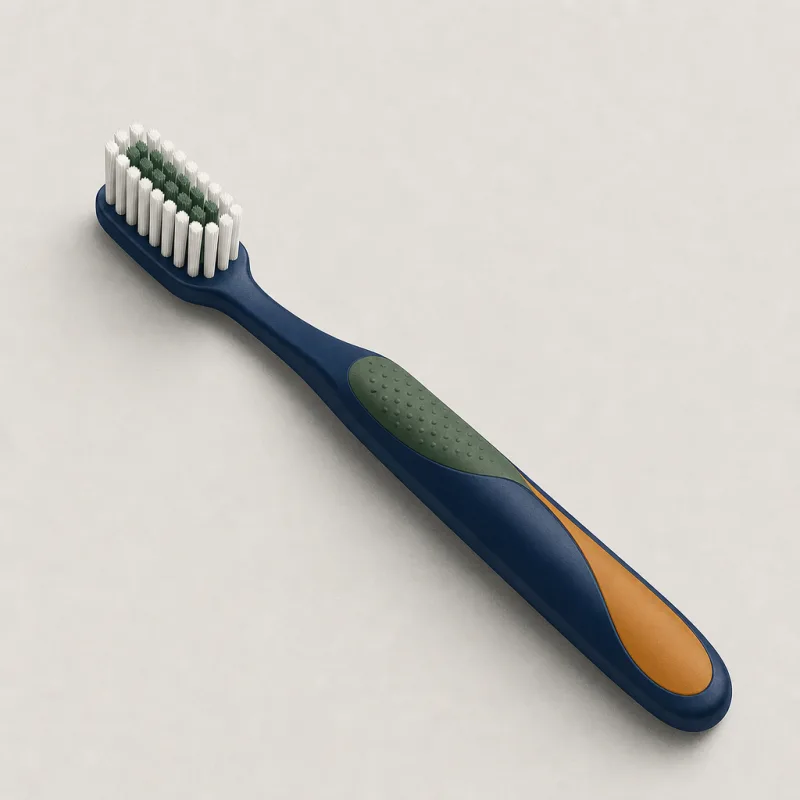
Replace your toothbrush every 3 months — or sooner as soon as the bristles fray. They clean worse than you think well before that.
Every three months — or sooner
Dentists recommend replacing your toothbrush or electric brush head about every three months. The reason is not visible wear but declining cleaning power: over time the bristles lose their resilience, bend and no longer properly reach the gaps between teeth and the gum line.
How fast that happens depends on your brushing. If you press hard or have a rough technique, the bristles fray faster — then a change makes sense after just six to eight weeks. Visibly frayed, outward-bent bristles are always a signal to replace, regardless of the calendar.
A second, often forgotten trigger is illness. After a cold, the flu or a mouth infection you should replace the brush, since germs can linger in the bristles and encourage reinfection. Electric brush heads are no different here from manual toothbrushes.
Many brushes have coloured indicator bristles that serve as a reminder: when the colour fades to about halfway, it is time for a new brush. If you do not use such a brush, you can tie the change to the change of seasons — a fresh brush four times a year is a simple rule of thumb that fits the three-month rhythm well.
How do I know the brush is done?
The state of the bristles is the best guide:
The bristles splay and bend outward — then they no longer clean properly.
The coloured marker bristles have faded to about halfway — the built-in change signal.
Replace after a cold, the flu or a mouth infection to avoid reinfection.
Replacement interval at a glance
The calendar is only the upper limit — condition comes first:
| Situation | Replace |
|---|---|
| Manual toothbrush | every 3 months |
| Electric brush head | every 3 months |
| Frayed bristles | at once |
| After illness/cold | replace afterward |
| Kids toothbrushes | often sooner |
Keep it hygienic longer
This keeps the brush hygienic until you replace it:
Rinse after use — rinse off toothpaste and food debris thoroughly.
Let it dry upright — in the air, not in a closed case, where germs thrive.
Do not share — one brush per person only.
Keep distance — do not let brush heads touch in the cup.
Common myths
A few myths surround the toothbrush:
No — from three months on the bristles clean worse, long before they look broken.
No — bristles that are too hard harm the gums and enamel; medium to soft is better.
No — heat deforms the bristles; replacing beats disinfecting.
The worn old toothbrush need not go unused into the bin: as a cleaning helper for grout, faucets, keyboards or shoes it is excellent. That gives it a second life before disposal. For families a fixed rhythm helps: swap all the household brushes every three months, easiest at the change of quarter. Different-coloured brushes or heads also prevent mix-ups in a shared cup — important, since a brush should only ever be used by one person. And when travelling, let the brush dry before it goes into a closed case, or germs settle in.