Engine Air Filter
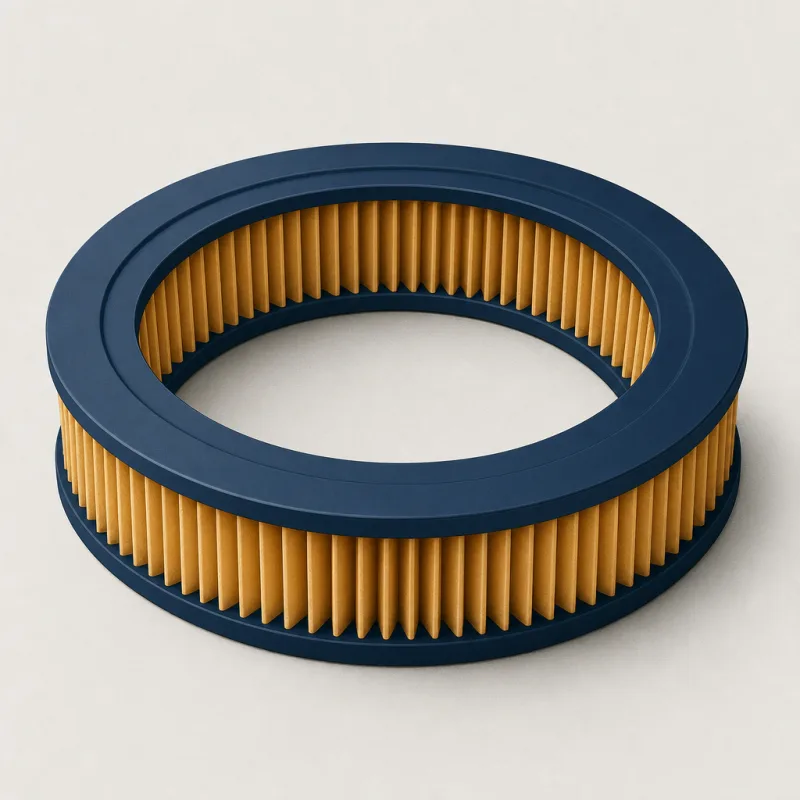
Change the engine air filter every 15,000 to 30,000 miles or about every three years. On dusty roads much more often.
Every 15,000–30,000 miles or about every three years
The engine air filter cleans the air the engine draws in for combustion. How often it is changed is set by the maker — commonly every 15,000 to 30,000 miles or about every three years. If you drive a lot on dusty roads, gravel or in dry regions, you should change the filter much sooner, because it clogs faster then.
The filter keeps dust, sand, insects and dirt away from the engine's sensitive parts. If unfiltered air reaches the combustion chamber, the particles act like an abrasive and increase wear on cylinders and pistons. A working air filter is therefore not only a matter of performance but also of engine protection.
A clogged air filter lets through too little air, making the mixture too rich. The consequences are a noticeable loss of power, higher fuel use, sluggish throttle response and, in the extreme, dark exhaust. Because the decline sets in gradually, in daily driving it is often only noticed once the fresh filter shows the difference.
The engine air filter is a paper or fleece element and is checked at service. A lightly dusty filter can be carefully tapped out or blown out from the inside with compressed air, but a heavily soiled or oily filter should be replaced. It is important not to confuse it with the cabin or pollen filter, which cleans the air for the passenger compartment.
How do I spot a clogged air filter?
Several signs point to a due filter:
The engine responds sluggishly and feels weaker overall than usual.
Rising fuel consumption can point to too little air and a too-rich mixture.
A dark, dusty or oily filter element should be replaced.
Change interval at a glance
Spec and environment set the rhythm:
| Situation | Change |
|---|---|
| Per maker spec | 15,000–30,000 miles |
| By time | about every 3 years |
| Lots of dust / gravel | much sooner |
| Power loss | have checked |
Check & change
This keeps the engine well supplied with air:
Check at service — have the filter inspected regularly.
Change per spec — keep the maker interval, sooner in dust.
Blow out lightly — only lightly dusty filters, tapped out carefully.
Do not wash with water — wet paper filters lose their function.
Common myths
A few myths surround the air filter:
No — it clogs and is due every few years depending on environment.
No — wet paper clumps; washing destroys the filter.
No — one protects the engine, the other cleans the air in the interior.
A fresh air filter is most noticeable on older cars with high mileage — the engine takes the gas noticeably better and runs more smoothly. The change is easy on many vehicles: the filter box sits accessibly in the engine bay and can usually be opened with a few clips or screws. A common misconception is that a sport air filter automatically brings more power — on a stock engine the difference is barely noticeable, while some open filters let more dirt through. For the vast majority of vehicles the right paper filter per maker spec is the best choice. When changing, it is important to fit the filter the right way round and sealed, so no unfiltered air slips past the element.