Yeast
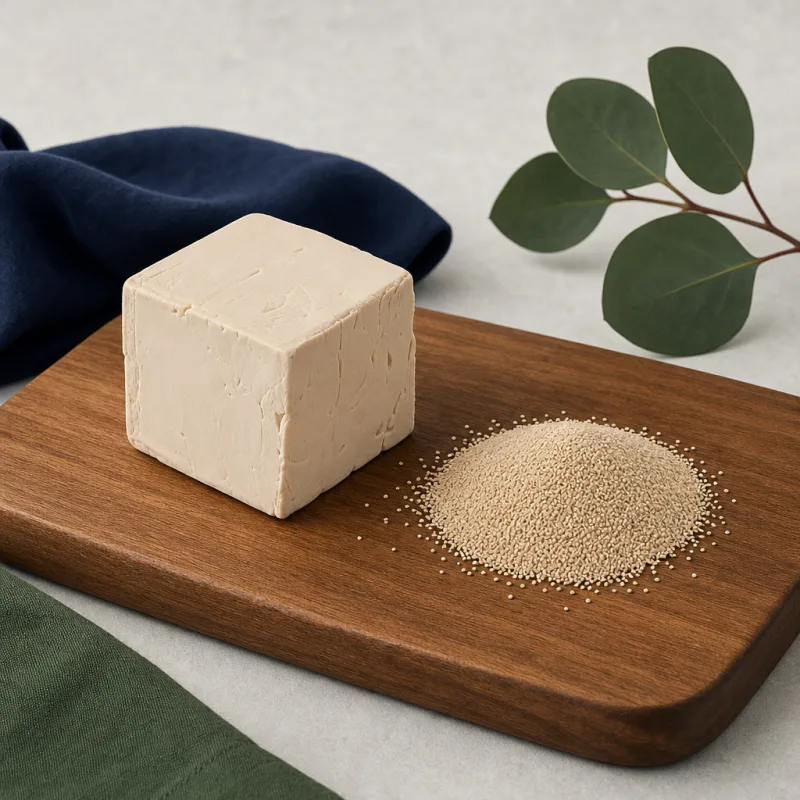
Fresh yeast lasts about 2 weeks refrigerated to the use-by date, dry yeast many months unopened. Both lose their leavening power over time.
Fresh yeast about 2 weeks, dry yeast many months
With yeast you have to distinguish fresh yeast and dry yeast. Fresh cake yeast keeps in the fridge roughly to the printed use-by date, usually about two weeks. Dry yeast in a packet keeps very long unopened thanks to the packaging — often many months to over a year to the best-by date. Both are living or dormant cultures and lose their leavening power over time.
Fresh yeast is much more delicate. It belongs consistently chilled and should be used within a few days once opened. To keep it longer, you can freeze it — after thawing the leavening power is a little lower but usually still works. Fresh yeast is recognized by a pale, creamy color and a pleasant yeasty smell; it crumbles easily.
Dry yeast is more practical for stocking up, because it stays stable long in cool, dry storage. After opening a packet you should seal it airtight and use it promptly, or the yeast draws moisture and loses power. Opened packets keep best in the fridge.
What matters with any yeast is not the date alone but the actual leavening power. Old yeast is harmless to health but no longer raises the dough, so bread and cake stay flat and dense. If unsure, do a quick proofing test before baking — that avoids failed doughs with expensive ingredients.
Stir the yeast into a little lukewarm water with a pinch of sugar (crumble in fresh yeast, sprinkle in dry yeast). If the yeast is still active, a clear, foamy crown forms on the surface within ten to fifteen minutes. If nothing happens, the leavening power is gone — the yeast no longer raises the dough and should be replaced. Fresh yeast should also smell pale and yeasty, not sour.
Shelf life at a glance
Yeast type and storage decide:
| Yeast type | Shelf life |
|---|---|
| Fresh, refrigerated | ~2 weeks, to date |
| Fresh, frozen | several months |
| Dry, unopened | many months, to best-by |
| Dry, opened | use promptly |
Store it right
This preserves the leavening power:
Chill fresh yeast — consistently in the fridge, use quickly once opened.
Freeze — fresh yeast can be frozen in portions.
Dry yeast airtight — seal opened packets well, store cool and dry.
Test before baking — when unsure, do a quick proofing test.
Common myths
A few myths surround yeast:
No — old yeast is harmless, it just no longer raises the dough.
No — it too loses leavening power after opening and over time.
You can — frozen it keeps for months, the power is only slightly lower afterward.
Yeast needs warmth and food to work: water hotter than about 115 °F kills the yeast cultures, while lukewarm liquid activates them. So the dough turns out best when all ingredients are at room temperature and the dough may rest in a warm, draft-free spot — not the amount of yeast but the right handling decides the result. As a rough guide, one cube of fresh yeast replaces about two packets of dry yeast and is enough for around a pound of flour. If you have no yeast at home, for some recipes you can fall back on baking powder or a sourdough starter — though both leaven differently and give a slightly different bake.