Flour
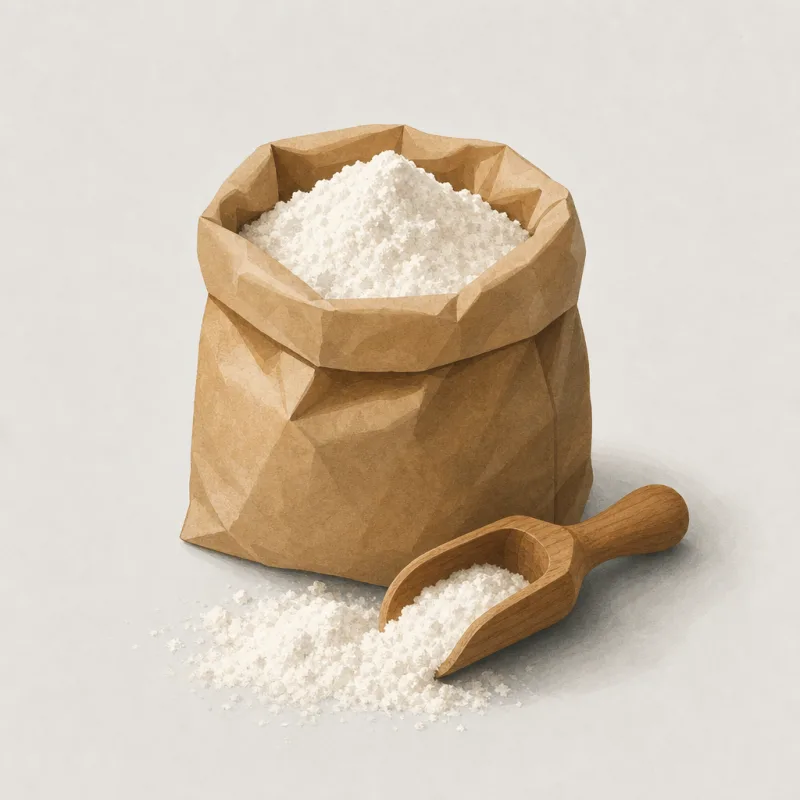
White all-purpose flour keeps for about a year when stored dry — whole wheat flour much less. The printed date is a guideline, not a throw-away deadline.
Why flour keeps for different lengths
How long flour stays good depends mostly on how much of the grain it contains. White all-purpose flour is milled from the starchy endosperm and holds almost no fat, so it is very shelf-stable and keeps for about a year stored dry, often longer. Whole wheat flour, by contrast, includes the oily germ and bran. Those oils go rancid over time, which is why whole wheat, rye and other whole-grain flours stay fresh for only about three months in the pantry.
The date on the bag is a cautious guarantee from the manufacturer, not an expiry. Storage is what matters most: moisture, warmth and oxygen shorten shelf life and attract pantry pests. Kept dry, cool and airtight, white flour easily outlasts its printed date by many months.
Roughly a third of the food produced worldwide is thrown away, and misread dates are a big reason. Flour is among the pantry staples discarded soonest, yet it rarely needs more than a quick sniff. If it smells neutral and shows no pests, it is still good.
Source: FAO / USDAHow do I spot bad flour?
You can catch spoiled flour with your nose and eyes — do not rely on the date alone:
Fresh flour smells neutral to faintly grainy. A rancid, musty or sour smell means the fat has spoiled, especially in whole wheat — discard it.
Tiny beetles, larvae, fine webbing or clumps point to weevils or pantry moths. Throw out the whole bag.
Hard clumps or a damp spot mean moisture got in — the ideal condition for mold.
Take a handful of flour and smell it: fresh flour smells neutral, while rancid or musty flour has spoiled. Also sift it briefly — if small beetles, larvae or webbing stay in the sieve, pantry pests have moved in and the flour should be discarded.
Shelf life by flour type
The whiter the flour, the longer it keeps. This table shows typical figures for dry storage:
| Flour type | Shelf life (pantry) |
|---|---|
| All-purpose / white | about 1 year |
| Bread flour | about 1 year |
| Whole wheat | 1–3 months (6 in fridge) |
| Rye | 3–6 months |
| Freshly milled | a few weeks |
Store it right
The right storage keeps flour fresh longer and pest-free:
Transfer to airtight — a sealed jar or container keeps out moisture and moths.
Cool and dark — a pantry away from the stove and window is ideal.
Refrigerate whole wheat — the fridge or freezer keeps oily whole-grain flour fresh for months longer.
Do not mix old and new — keep batches separate so pests cannot spread.
Common myths
A few flour myths lead to needless waste:
Not true — white flour is often good for many months longer. Smell and check, do not go by the date.
No — whole wheat spoils far faster than white flour because of its fat content.
Not necessarily — the eggs are often already in the bag at purchase. Airtight storage protects best.
To guard against pantry moths, drop a bay leaf into the container — the smell repels them. And a quick freshness test: rub a little flour between your fingers; it should feel fine and smell neutral, not clumpy or rancid.