Bread
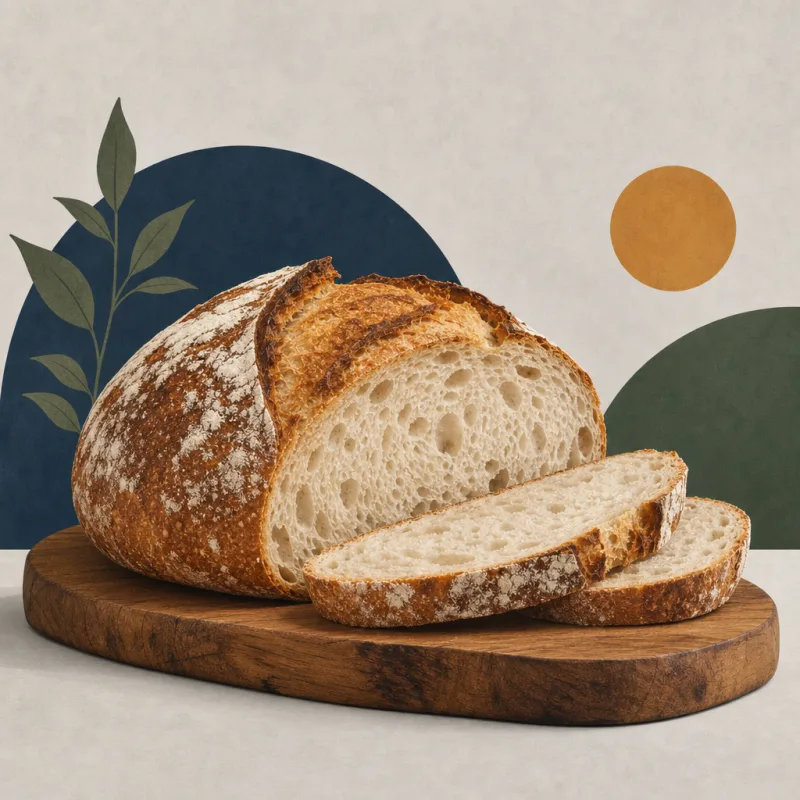
Bread keeps 2 to 5 days at room temperature — white bread less, rye and sourdough longer. Not in the fridge, where it goes stale faster.
The type makes the difference
How long bread stays fresh depends above all on the type. Light wheat and sandwich bread dries out fast and really only tastes good for two to three days. Mixed and rye breads keep four to seven days thanks to their higher acidity, and true sourdough lasts longest. Whole, unsliced loaves stay fresh longer than sliced ones, because less surface dries out.
One key point first: bread does not belong in the fridge. The cold makes the starch recrystallise faster (retrogradation), so the bread turns stale and dry more quickly — the opposite of what you want. Better is a wooden or ceramic bread box, or a cotton bag at room temperature — airy, but not airtight.
With bread it is less about safety than enjoyment — with one important exception: mould. If even a single mould spot appears, the whole loaf goes in the bin, not just the affected patch. In the soft, moist interior the fine mould threads spread invisibly. Stale but mould-free bread, on the other hand, is completely harmless and easy to put to good use.
How do I spot bad bread?
With bread, tell stale apart from mouldy:
Hard, dry bread is just old, not spoiled — it can be toasted, refreshed in the oven or repurposed.
Fuzzy white, green or black spots mean: discard the whole loaf, do not cut around them.
A damp, musty or alcoholic smell is an early warning sign, even without visible mould.
Give the bread a brief squeeze. If it is only hard and dry, it is stale — toasted or briefly reheated it becomes edible again. Also check the whole surface and cut faces for fuzzy spots. If you find even one mould spot, the entire loaf goes in the bin: the mould threads run invisibly through the soft interior, and cutting around it is not enough.
Shelf life at a glance
The darker and more acidic, the longer it stays fresh:
| Type | Shelf life |
|---|---|
| White/sandwich bread | 2–3 days |
| Mixed-grain bread | 3–5 days |
| Rye/sourdough bread | 5–7 days |
| Frozen | 2–3 months |
Store it right
This keeps bread fresh longest:
Bread box, not fridge — wood or ceramic at room temperature; the cold makes bread go stale faster.
Airy, not airtight — in plastic bread sweats and moulds faster.
Cut side down — a sliced loaf dries out more slowly this way.
Freeze for stock — frozen in slices, bread can be toasted one piece at a time.
Common myths
A few myths surround bread:
Wrong — the cold makes bread go stale faster. Room temperature or frozen keeps it better.
No — in soft bread the mould threads run through the whole loaf. It has to go entirely.
Not at all — as croutons, breadcrumbs, French toast or reheated it still tastes great.
The best storage trick is freezing: sliced and frozen, bread can be taken out one piece at a time and thawed straight in the toaster — so there is always fresh bread without half a loaf going stale. Whole loaves thaw best at room temperature and then a brief reheat in the oven.