Sour Cream
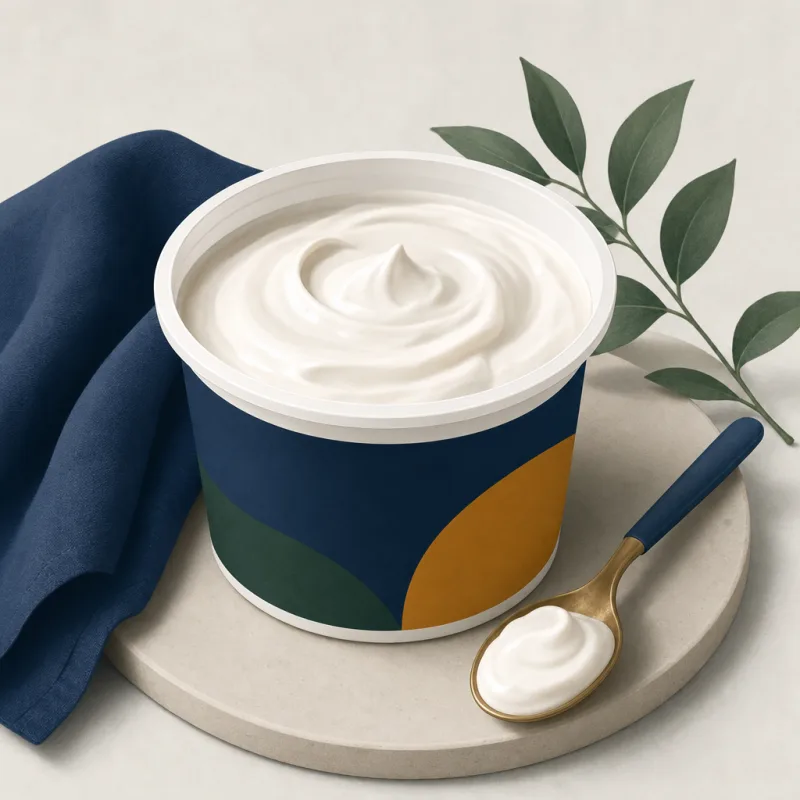
Sour cream lasts about 1 to 2 weeks opened and chilled, unopened to the printed date. A clean spoon extends its shelf life.
Opened 1 to 2 weeks, unopened to the date
Sour cream is a cultured dairy product and keeps a little longer than sweet cream thanks to its acidity. Unopened it keeps reliably in the fridge to the printed best-by or use-by date. After opening, you should use up the tub within about one to two weeks, provided it stays clean and consistently chilled. Higher-fat versions tend to keep slightly better than low-fat ones.
The souring makes sour cream naturally a bit more durable than sweet cream, because the lactic-acid bacteria it contains slow the growth of unwanted germs. Still it is a fresh product and belongs consistently in the fridge. It is important to always take sour cream out with a clean spoon and close the tub well, so no foreign germs get in.
A common misunderstanding concerns the whey. If some clear liquid settles on top, that is usually normal and no sign of spoilage — you can simply stir it back in. Only when mold forms, the smell turns bitter, yeasty or unpleasantly fermented, or the tub bulges, is the sour cream spoiled and should be discarded.
In cooking, sour cream shows a practical trait: because of its fat content it curdles less easily in warm sauces than very low-fat versions. For freezing it is only somewhat suitable, because after thawing it separates slightly and turns watery. For dips and spreads it is therefore best used fresh.
Open the tub and look at it, then smell it. Fresh sour cream is evenly creamy-white and smells mild and tart. If mold forms — including colored spots at the rim —, it smells bitter, yeasty or sharply fermented, the tub is bulging, or a yellowish to pink discoloration shows, it should be discarded. A thin layer of clear whey on top, by contrast, is normal and can be stirred in.
Shelf life at a glance
Opening state and hygiene decide:
| State | Shelf life |
|---|---|
| Unopened, chilled | to the date |
| Opened, clean, chilled | 1–2 weeks |
| Whey settled | normal, stir in |
| Mold / bitter | discard |
Store it right
This keeps sour cream fresh longer:
Chill throughout — do not leave it at room temperature.
Clean spoon — never dip in with a used spoon or fingers.
Close the tub — cover it well after taking some out.
Stir in whey — simply stir settled liquid back in.
Common myths
A few myths surround sour cream:
No — the clear whey on top is normal and can simply be stirred in.
Only somewhat — after thawing it separates and turns watery.
No — the souring only slows germs and replaces neither chilling nor the date.
Sour cream, crème fraîche and similar cultured creams differ mainly in fat content: light sour cream has around ten percent fat, regular more, and crème fraîche around thirty percent. The higher the fat, the more heat-stable the product — which is why crème fraîche curdles least in hot sauces and full-fat sour cream still less than the low-fat kind.