Cheese
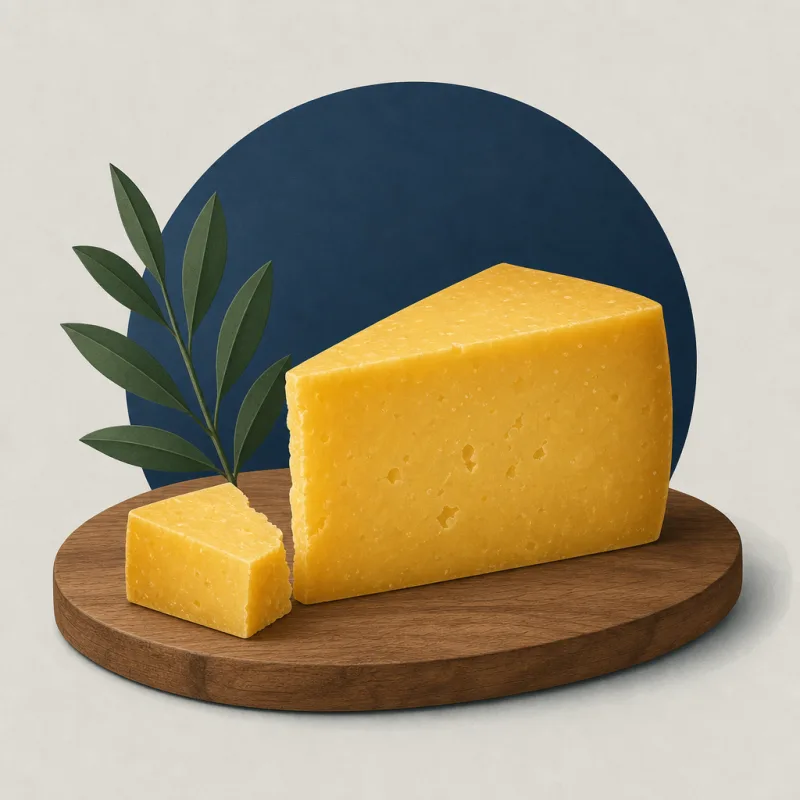
How long cheese lasts depends on the type — hard cheese keeps weeks to months, semi-soft one to two weeks, soft cheese only a few days.
Why the type decides everything
There is no single number for cheese, because shelf life depends heavily on moisture. As a rule, the harder and drier the cheese, the longer it keeps. Hard cheese like Parmesan or aged cheddar stays fresh for weeks to months refrigerated in the piece; semi-soft cheese like Gouda about one to two weeks once cut. Soft cheese like Brie or Camembert lasts only a few days to about a week, and fresh cheese or mozzarella three to five days once opened.
The reason is simple: water is what microbes and mould live on. Dry hard cheese offers them little; moist fresh cheese offers plenty. That is why handling mould differs by type. On hard cheese you can cut a small mouldy spot away generously — about an inch all around — and eat the rest. Soft and fresh cheese with unwanted mould should be discarded whole, because the network of threads runs through the moist mass.
The exception is cheese with deliberate mould like Roquefort, Gorgonzola or the white bloom on Brie — that mould belongs there and is fine. It only becomes a problem when a different, off-coloured mould also appears or the cheese smells sharply of ammonia. Then even a blue cheese is past its point.
A practical special case is grated or pre-sliced cheese: the larger surface dries out and moulds faster than a whole piece. If you rarely eat cheese, buy small pieces in the block and grate fresh as needed. Leftovers freeze too — hard cheese survives freezing best, while soft cheese turns crumbly afterwards and is only good for melting into dishes. That way less ends up wasted.
How do I spot bad cheese?
Cheese shows different warning signs by type:
Unexpected green, black or pink growth. Cut away generously on hard cheese; discard soft cheese entirely.
A sharp ammonia smell on soft cheese means over-ripe; a sour, musty smell on fresh cheese means spoiled.
A slimy surface on semi-soft cheese, or dried, cracked edges, change quality and taste.
Shelf life at a glance
The drier the cheese, the longer it keeps:
| Type | Shelf life |
|---|---|
| Hard (Parmesan), refrigerated | weeks to months |
| Semi-soft (Gouda), cut | 1–2 weeks |
| Soft (Camembert) | a few days – 1 week |
| Fresh/mozzarella, opened | 3–5 days |
Store it right
The right storage keeps cheese fresh longer:
Cheese paper, not cling film — cheese needs to breathe; film makes it sweat and mould. Wax or cheese paper is ideal.
In the crisper drawer — the coolest, most humid zone of the fridge suits it best.
Separate the types — keep strong and mild cheeses apart so flavours and mould do not transfer.
Buy in the piece — large pieces keep longer than grated or sliced cheese.
Common myths
A few myths surround cheese:
No — only the deliberate blue or bloomy mould. Unwanted mould on soft cheese makes it inedible.
Only hard cheese. On soft and fresh cheese the mould runs through the whole mass.
Better not — cheese needs air. In film it sweats and spoils faster.
Cheese gone hard is not waste: grate it for gratins or soups. Even a Parmesan rind adds deep flavour to soups and stews — just simmer it along and lift it out before serving.