Peanut Butter
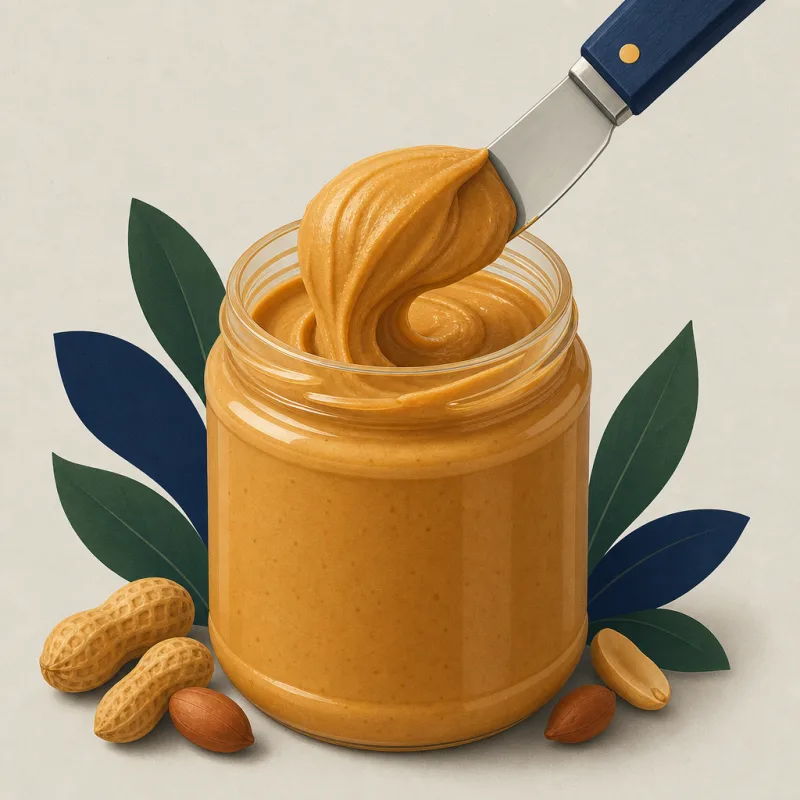
Opened peanut butter keeps 2 to 3 months or more. Spoilage here means rancid, not mouldy — refrigerate the natural kind.
Fat, not water — it spoils slowly
Peanut butter is remarkably long-keeping. It is almost all fat and protein and contains barely any water — and without water, bacteria and mould have little chance. Unopened, it keeps to its best-before date and usually months beyond. Once opened, well sealed at room temperature, it stays good for two to three months, often longer.
The type is decisive. Conventional peanut butter with a little sugar and stabilised fat is especially long-keeping and does not need refrigerating. Natural peanut butter, made only of ground peanuts and perhaps some salt, turns rancid faster because the unsaturated fats are exposed to air. It keeps much longer in the fridge — where it does firm up, but stays fresh.
With natural peanut butter an oil layer settles on top. That is completely normal and no sign of spoilage — simply stir it in thoroughly before first use and then store it cool, so the oil does not separate again. Spoilage in peanut butter shows not as mould but as rancidity: the fat oxidises and then smells sharp, like old nuts or paint.
To keep it from getting that far, clean handling helps: always use a dry, clean spoon or a knife without crumbs. If moisture or organic matter gets into the jar, mould can, in rare cases, form after all. Otherwise the biggest risk is the slow rancidity of the fat — and that can be delayed considerably with cool, airtight storage.
How do I spot bad peanut butter?
Spoilage almost always shows through smell:
Sharp, like old nuts or oil paint instead of nutty and mild: the fat has oxidised.
A scratchy, bitter aftertaste confirms the rancidity — then do not eat it.
Fuzzy spots only form if moisture got into the jar — then discard it entirely.
Open the jar and smell it. Fresh peanut butter smells mild and nutty. If it smells sharp, pungent, like old nuts or crayons, the fat has gone rancid — then do not eat it. An oil layer settled on top, by contrast, is completely normal and is simply stirred in; it has nothing to do with spoilage.
Shelf life at a glance
The type sets the window:
| State | Shelf life |
|---|---|
| Unopened | date + months |
| Opened, conventional (room temp) | 2–3 months |
| Opened, natural (refrigerated) | several months |
| Natural, unrefrigerated | turns rancid faster |
Store it right
This keeps peanut butter fresh longest:
Seal well — air contact speeds up rancidity.
Refrigerate the natural kind — peanuts only = more delicate fat, fresher in the fridge.
Clean spoon — no crumbs or moisture into the jar.
Stir the oil in — work settled oil in before storing.
Common myths
A few myths surround peanut butter:
No — with natural peanut butter that is completely normal, just stir it in.
Hardly — without water, mould barely grows. The real spoilage is rancidity.
Conventional does not; only the natural kind keeps much longer chilled.
Slightly rancid peanut butter should go, as rancid fats not only taste unpleasant but are also unfavourable healthwise. If you eat peanut butter rarely, buy a smaller jar or store the natural kind consistently in the fridge.