Jam
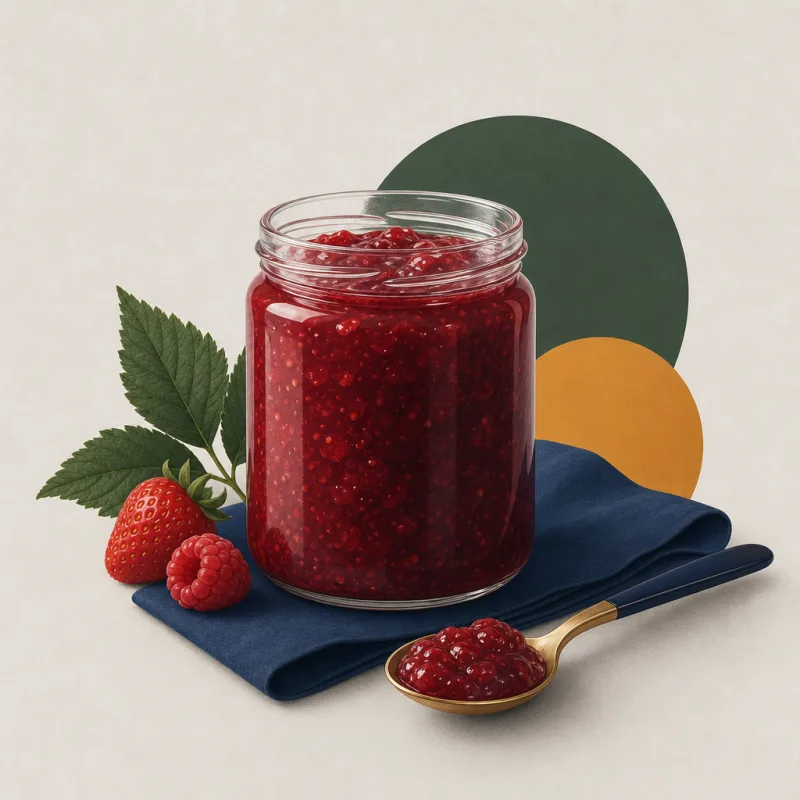
Opened jam keeps 3 to 6 months in the fridge. The high sugar preserves it — but if mould appears, the whole jar must go.
Sugar preserves — until mould appears
Jam and preserves are among the longest-keeping foods in the pantry. The high sugar content binds the water and starves microorganisms of what they need. Unopened, jam therefore keeps for several years, often well past the best-before date — provided the jar is undamaged and the lid is domed (vacuum-sealed).
Once opened, jam belongs in the fridge. There, standard preserves keep about three to six months. Reduced-sugar types, homemade jam with less sugar and jellies without preserving acidity spoil faster and should be used up within a few weeks. Sugar only protects while it is present in high concentration.
The biggest enemy is mould — and it almost always comes from contamination. A bread knife with butter or crumb residue brings fat and germs into the jar, on which mould grows. So the rule is: always use a clean spoon, never dip a buttered knife straight into the jar. If mould appears, the whole jar goes — in high-sugar foods, invisible mould toxins can spread deep into the contents.
A common misunderstanding concerns sugar crystals: if a grainy, hard layer forms at the rim or in the jar, that is crystallised sugar and completely harmless. A slightly darker surface or a little separated liquid are normal signs of age too. Only a fuzzy coating is true mould — you can tell the difference by its downy, often coloured structure.
How do I spot bad jam?
Ageing and true spoilage look different:
Fuzzy white, green or black spots mean: discard the whole jar, do not skim it off.
Bubbling, a bulging lid or an alcoholic smell show that the jam is fermenting.
A grainy, hard layer is crystallised sugar — not spoilage, just stir it in.
Look at the surface and the rim under the lid. A single fuzzy spot is enough: with high-sugar jam do not simply skim off the mould, but discard the whole jar. The fine mould threads and their toxins run invisibly through the soft mass. Grainy, hard sugar at the rim, by contrast, is harmless — it can be stirred in.
Shelf life at a glance
The sugar content sets the window:
| Type | Shelf life |
|---|---|
| Unopened | several years |
| Opened, refrigerated (standard) | 3–6 months |
| Reduced-sugar/homemade | a few weeks |
| Jelly without much acidity | shorter |
Store it right
This keeps jam good longest:
Refrigerate after opening — in the fridge jam keeps longest.
Clean spoon — never dip a buttered knife into the jar.
Seal well — protects against drying out and germs.
Cool and dark unopened — pantry, not above the stove.
Common myths
A few myths surround jam:
No — with jam, discard the whole jar; the mould toxins run through the soft mass.
Unopened for a very long time, but opened it does — especially reduced-sugar and homemade.
Crystallised sugar is harmless; only a fuzzy coating is mould.
Homemade jam keeps longer if you fill it hot into sterile jars and seal at once — the vacuum that forms works like on store-bought preserves. If you reduce the sugar, cook smaller jars that get used up fast, and use them promptly once opened.