Mustard
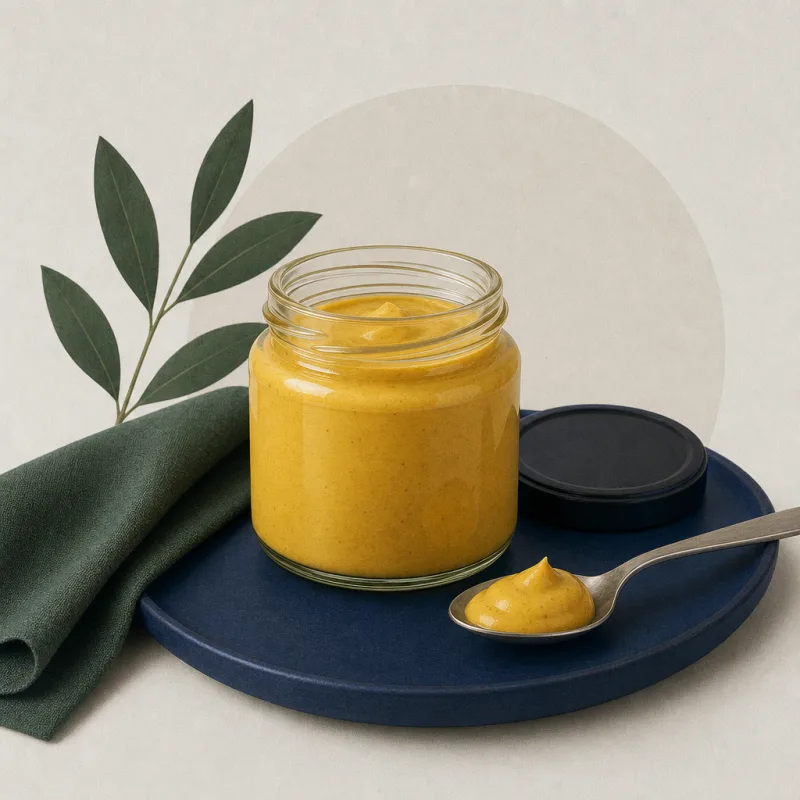
Opened mustard easily keeps a year or more in the fridge. Vinegar and acid preserve it — over time it only loses its heat.
Vinegar preserves, the heat fades
Mustard is one of the longest-keeping condiments in the fridge. Vinegar, salt and the acidity of the mustard seeds act as natural preservatives, making it almost impervious to bacteria. Unopened, mustard therefore keeps well past its printed best-before date — often for several years.
Once opened, mustard stays good in the fridge for a year easily, many types even longer. What changes is not safety but heat: the volatile mustard oils that give it its signature kick dissipate over time. Old mustard turns milder, darker and less aromatic — but that does not mean it has spoiled.
To keep mustard good for a long time, clean handling matters: always use a fresh, clean spoon and keep the jar or tube well sealed in the fridge. That way no food residue or bacteria get in to spoil it. A thin, dried or slightly darkened layer on top is normal and can simply be scraped off or stirred in.
There are differences between types: sharp Dijon and medium-hot mustard lose their heat most noticeably, while mild mustard ages more discreetly. Mustard with additions such as fig, honey or herbs keeps a little less long than plain mustard, because the added ingredients are more delicate. If you care about a proper kick, buy mustard in smaller amounts and refresh it more often.
How do I spot old mustard?
With mustard it is usually about heat, not spoilage:
The signature kick is missing, the mustard tastes milder and flatter — the most common sign of age.
A darkened or dry layer on top is cosmetic — scraping off or stirring in is enough.
Mould, a fermented smell or bubbles are a clear stop signal — then discard it.
Shelf life at a glance
The type mainly decides how long the heat lasts:
| State | Shelf life |
|---|---|
| Unopened | well past the date (years) |
| Opened, refrigerated | 1 year or more |
| Dijon/hot mustard | heat fades faster |
| Mustard with additions (fig, honey) | a little shorter |
Store it right
This keeps mustard fresh and sharp longest:
Always refrigerate — in the fridge mustard keeps freshest and sharpest.
Clean spoon — keep food residue out of the jar.
Seal well — protects against drying out and aroma loss.
Prefer the tube — less air contact than an open jar.
Common myths
A few myths surround mustard:
No — vinegar and acid preserve it far longer than an egg-based mayonnaise.
Only oxidised at the surface — scraping off or stirring in is enough.
Unrefrigerated it keeps less long and loses its heat faster.
Old, mellowed mustard need not be thrown out: it shines in salad dressings, marinades, sauces or to finish gravies. There it adds emulsifying body and a fine seasoning, without the faded heat mattering. If you make your own mustard, store it cool and well sealed too; homemade mustard without stabilising additives keeps less long than store-bought. And mustard develops its full heat only a few days after mixing, then slowly loses it again — so buy small and refresh often if you like it sharp.