Mayonnaise
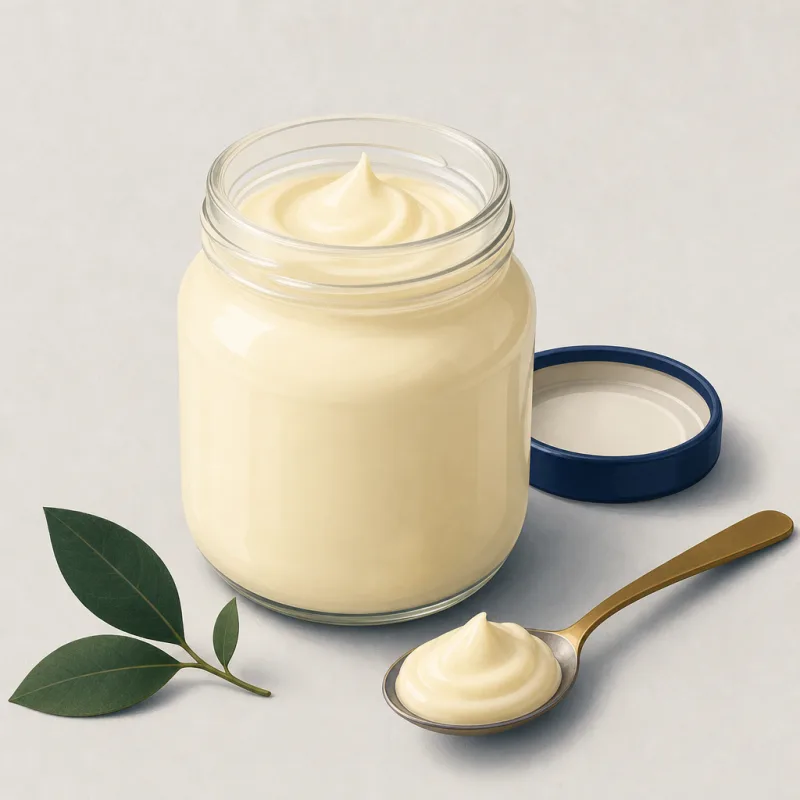
Store-bought mayonnaise keeps 2 to 3 months opened and refrigerated. Homemade with raw egg only one to two days — salmonella is the risk.
Store-bought long, homemade delicate
With mayonnaise, it matters greatly whether it is store-bought or homemade. Commercial mayonnaise is made with pasteurised egg, acid from vinegar or lemon and often preservatives. Unopened it keeps to the best-before date, opened and refrigerated about two to three months.
Homemade mayonnaise is a different matter entirely. It contains raw egg yolk, which can carry salmonella, and no commercial preservatives. It keeps in the fridge only one to two days and should be used as fresh as possible — especially for pregnant women, young children and older or immunocompromised people, raw egg is a serious risk.
Spoilage shows in mayonnaise as a sour or rancid smell, a separation of oil and mass, flakes or a brownish discolouration. Clean handling matters: always use a fresh spoon, never used or greasy cutlery in the jar. And after opening, mayonnaise belongs consistently in the fridge, not for hours at room temperature on the table.
In summer especially, attention pays off. If mayonnaise or a salad dressed with it sits long in the warmth, germs can multiply. So for cookouts and picnics: keep the bowl cool, on ice or in the shade, and when in doubt discard leftovers that stood in the sun for a long time.
How do I spot bad mayonnaise?
Spoiled mayonnaise gives itself away through smell and texture:
A sharp or rancid smell instead of a mild tang signals spoilage.
A clear separation of oil and mass or flakes are a warning sign.
If the mass darkens or discolours, it should be discarded.
Smell the mayonnaise and stir it briefly. Fresh mayonnaise smells mildly tangy and is evenly creamy. If it smells rancid or sharply sour, the oil has clearly separated or the mass flakes, it has spoiled — then throw it out. A little oil beading on store-bought mayonnaise, by contrast, simply stirs back in.
Shelf life at a glance
Store-bought or homemade makes all the difference:
| Type | Shelf life |
|---|---|
| Store-bought, unopened | to the date |
| Store-bought, opened, chilled | 2–3 months |
| Homemade (raw egg) | 1–2 days |
| Warm / in the sun | spoils fast |
Store it right
This keeps mayonnaise safe longest:
Always refrigerate — after opening, consistently in the fridge.
Clean spoon — no used or greasy cutlery in the jar.
Seal well — protects against other smells and drying out.
Use homemade at once — raw egg keeps only one to two days.
Common myths
A few myths surround mayonnaise:
Only store-bought, and opened a few months. Homemade lasts only one to two days.
No — raw egg without preservatives is far more delicate and salmonella-prone.
Usually not the acidic mayonnaise itself, but the warm-stored ingredients — still, keep it all cool.
Mayonnaise's bad reputation with summer salads is only half deserved. Store-bought mayonnaise is fairly stable thanks to its acidity; the real risk is the other ingredients such as egg, potato, pasta or meat, which spoil fast in the warmth. So potato and pasta salad belong chilled, not for hours in the sun.