Baking Powder
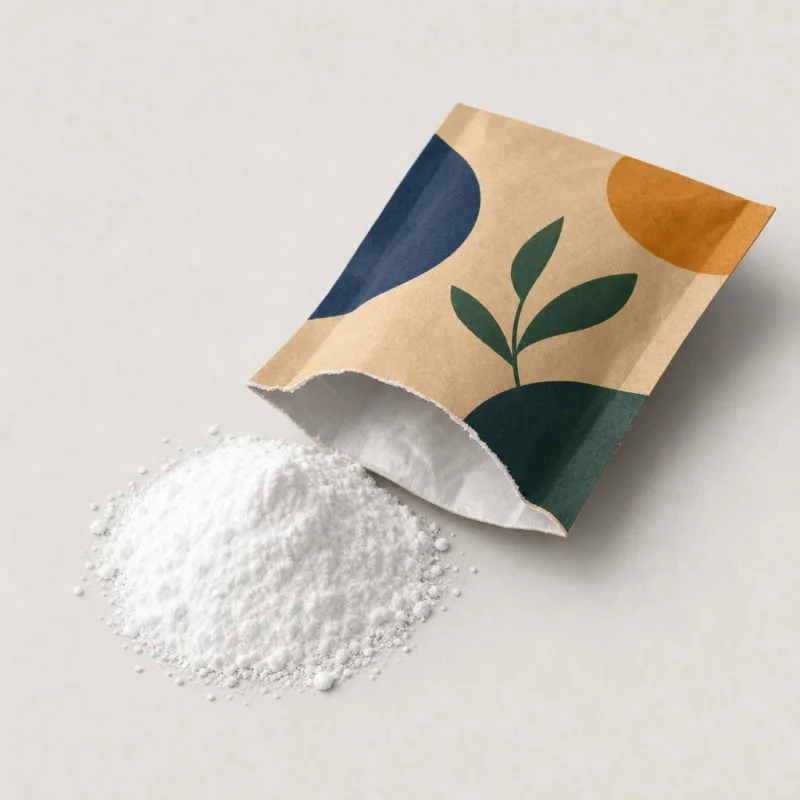
Unopened baking powder lasts 12 to 18 months to the best-by date. Opened it loses leavening power faster but does not spoil.
Unopened 12 to 18 months, then check the power
With baking powder you have to separate safety and effectiveness. The powder practically does not spoil and is fine even past the best-by date. What fades is the leavening power. Unopened, baking powder usually holds its effect twelve to eighteen months to the printed date. After that it may still work but need not have full strength.
The reason is its sensitivity to moisture. Baking powder consists of a leavening agent like baking soda and an acid component, which on contact with liquid and heat release carbon dioxide and lighten the dough. If the powder draws moisture already in the pack, the parts react prematurely and lose effect. So baking powder is more vulnerable after opening than in the sealed packet.
Spent baking powder is annoying because you often notice it only in the result: the cake does not rise properly and stays flat and dense. Since baking ingredients can be expensive, with older powder it pays to quickly test the effectiveness before baking rather than baking on chance.
Baking powder is to be distinguished from pure baking soda. Baking soda alone is stable even longer but needs an acid partner in the recipe, like buttermilk, to work. Baking powder already brings this acid component along. Both should be stored dry, cool and airtight so they keep their strength as long as possible.
Put a teaspoon of baking powder into a cup of hot water. If the powder is still effective, it fizzes and foams up strongly at once as carbon dioxide is released. If the reaction stays weak or absent, the baking powder has lost its leavening power and should be replaced. For pure baking soda, use a splash of vinegar instead of water — here too, strong fizzing shows it is still active.
Shelf life at a glance
Opening state sets the leavening power:
| State | Leavening power |
|---|---|
| Unopened | 12–18 months, to best-by |
| Opened, kept dry | months, fading |
| Gone damp | often spent |
| Pure baking soda | stable even longer |
Store it right
This preserves the leavening power:
Seal airtight — close opened packets or tins well.
Keep dry — moisture makes the powder react prematurely.
Store cool — not next to the stove or steam.
Test before baking — do the fizz test with older powder.
Common myths
A few myths surround baking powder:
No — it does not spoil but may have lost leavening power.
No — baking powder already contains an acid component, baking soda needs one in the recipe.
No — too much gives a soapy-bitter aftertaste and tends to collapse.
Baking powder has other household talents: as a baking-soda base it can bind odors in the fridge or help with cleaning, thanks to its mildly alkaline effect. For baking, though, only fresh leavening power counts — so an opened, already older pack is better used for spring cleaning, and a fresh one taken for baking. Because a packet of baking powder is usually meant for about a pound of flour, it pays to buy small amounts fresh rather than keep a large tin open for years. If you bake a lot, store the powder in a well-sealing jar and note the opening date on it to keep track of the leavening power.