Wiper Blades
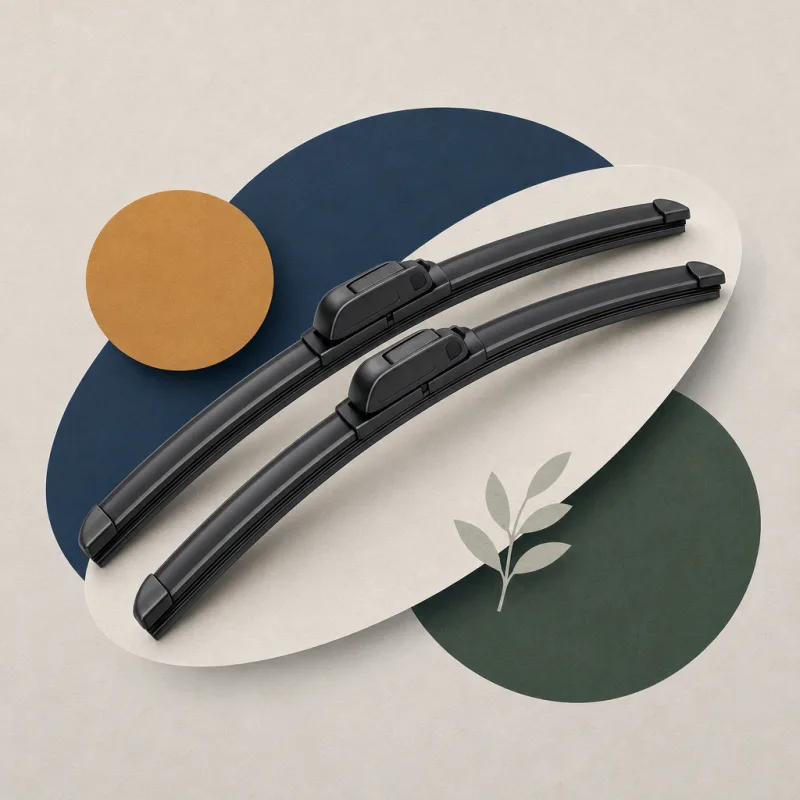
Wiper blades last about 6 to 12 months — or less, once they streak or chatter. The rubber edge ages from sun, heat and ice.
The rubber edge ages faster than you think
Wiper blades are a wear part and should be replaced about every six to twelve months. What matters is not calendar age but the state of the soft rubber edge. It only wipes water away streak-free while the edge stays smooth and flexible.
The biggest enemies of the wiper rubber are UV light, heat and cold. Sunlight and ozone gradually harden the rubber and make it brittle; in winter it tears on blades frozen to the glass. A car that sits in the sun a lot wears its wipers faster than one in a garage — regardless of how often it actually rains.
The clearest warning sign is streaking: if the blade leaves streaks in the rain, leaves standing films of water, or chatters and squeaks across the glass, the rubber edge is done. That is not just annoying but a real safety risk — at night and against oncoming headlights a smeared windshield can badly cut visibility.
An often overlooked factor is the glass itself: a dirty windshield or one coated with a greasy film makes even new blades smear. Cleaning the glass thoroughly and keeping enough washer fluid with cleaner topped up protects the rubber edge and improves the view. The blade itself can also be wiped free of grime with a damp cloth.
How do I spot worn wiper blades?
Worn blades show up immediately as you wipe:
The blade leaves streaks or standing films of water instead of clearing the glass.
The blade skips or squeaks across the glass instead of gliding evenly.
Visible cracks, hardened or frayed spots on the edge mean: replace.
Replacement interval at a glance
Use and location set the window:
| Situation | Replace |
|---|---|
| Normal use | every 6–12 months |
| Lots of sun / no garage | sooner |
| Streaking or chatter | at once |
| Cracked rubber edge | replace |
Use longer & care
This keeps blades wiping clean for longer:
Wipe the rubber edge — remove grime and film from the edge with a damp cloth.
Keep the glass clean — a grease-free windshield spares the blades and improves the view.
Lift them in winter — raise or free the blades so they do not freeze on and tear.
Never wipe dry — always use enough washer fluid; dry wiping ruins the rubber.
Common myths
A few myths surround wiper blades:
No — once they streak, visibility is already reduced; that is a safety risk.
Not necessarily — often a greasy windshield is to blame. Clean first, then judge.
Winter blades with a cover against icing last longer in frost and wipe more reliably.
When replacing, it pays to swap both blades at once — they wear at a similar rate. The change is usually tool-free in a few minutes: lift the wiper arm, unlatch the old blade, click in the new one. Do not forget the rear-window wiper, if fitted; it is often overlooked. A winter tip: lift the blades overnight when frost is forecast, so they do not freeze to the glass and tear when switched on, and top up winter washer fluid with antifreeze in good time.