First-Aid Kit
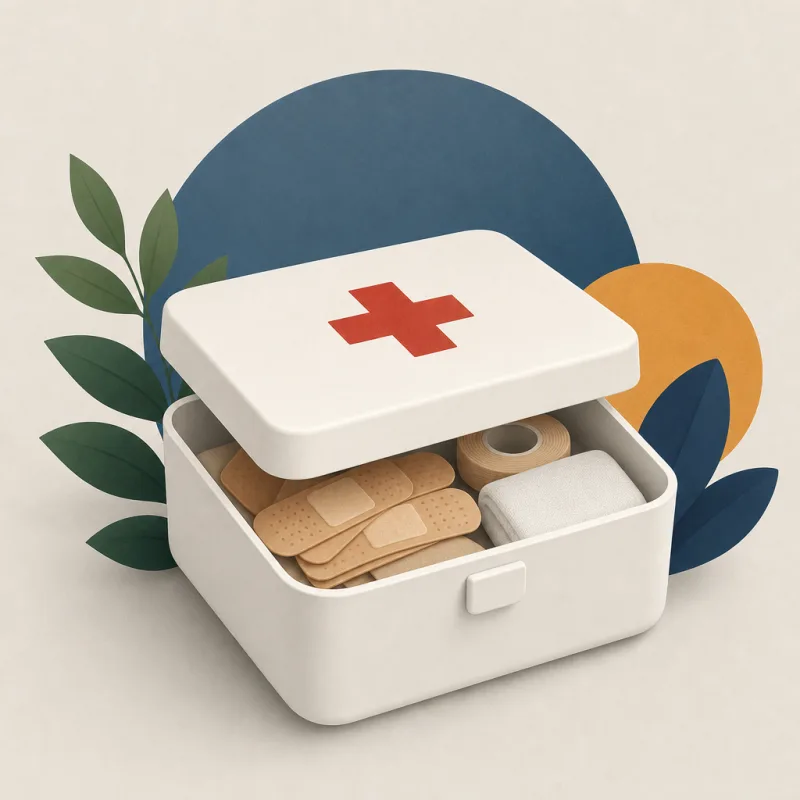
The kit itself does not expire, but its sterile supplies and medications do — many after about 5 years. Check the dates and restock; a first-aid kit is only useful if its contents still work.
Why a first-aid kit expires
A first-aid kit is a collection of sterile supplies: gauze, dressings, adhesive bandages, antiseptic wipes, and often a few medications. That sterility is exactly why the contents carry expiry dates. The packaging is sealed germ-free, but over time the seal weakens and sterility is no longer guaranteed. The materials age too: bandage adhesive dries out and stops sticking, antiseptic wipes dry up, and medications like aspirin or antihistamines lose potency. So the individual items carry printed dates, many about five years out.
Unlike in some countries, US drivers are not federally required to carry a car first-aid kit, though it is strongly recommended and certain commercial and workplace settings (OSHA) do require one. Either way, the point is the same: in an emergency you need supplies you can rely on. An expired kit with wipes that have dried out and bandages that will not stick is little help when it counts.
How do I know it needs restocking?
These signs mean it is time to refresh the contents:
Check the earliest date on the items and any medications. If it has passed, replace at least the affected supplies.
Yellowed, dried-out adhesive bandages that no longer hold are useless — a clear sign of aging.
Torn sterile wrappers, dried-out wipes or items missing after use mean: restock or replace.
Shelf life at a glance
This table sums up the key points:
| Aspect | Rule |
|---|---|
| Sterile supplies | often about 5 years |
| Medications | own expiry, often sooner |
| Antiseptic wipes | dry out over time |
| After use | restock missing items promptly |
| The box itself | lasts, just replace contents |
Store & check it right
The right handling keeps the kit ready when it counts:
Keep it out of heat — in a car, the cabin or under a seat is better than a hot trunk; heat ages supplies and medications faster.
Keep it dry — moisture attacks packaging and bandages.
Check twice a year — review the dates, for example when the clocks change, the same way you test smoke alarms.
Restock after use — replace anything you take out promptly so the kit stays complete.
Common myths
A few myths surround first-aid kits:
The box does not, but the sterile supplies and medications inside do. They carry printed expiry dates.
Improvising beats nothing — but expired items may no longer be sterile, and medications may have lost potency.
No — after about five years the supplies have expired and should be refreshed.
Set a recurring reminder to check your kit — pairing it with an existing habit like the twice-yearly clock change makes it easy to remember. Tip — keep a kit not only in the car but also at home and for cycling or hiking, and check each one on the same schedule.