Soy Sauce
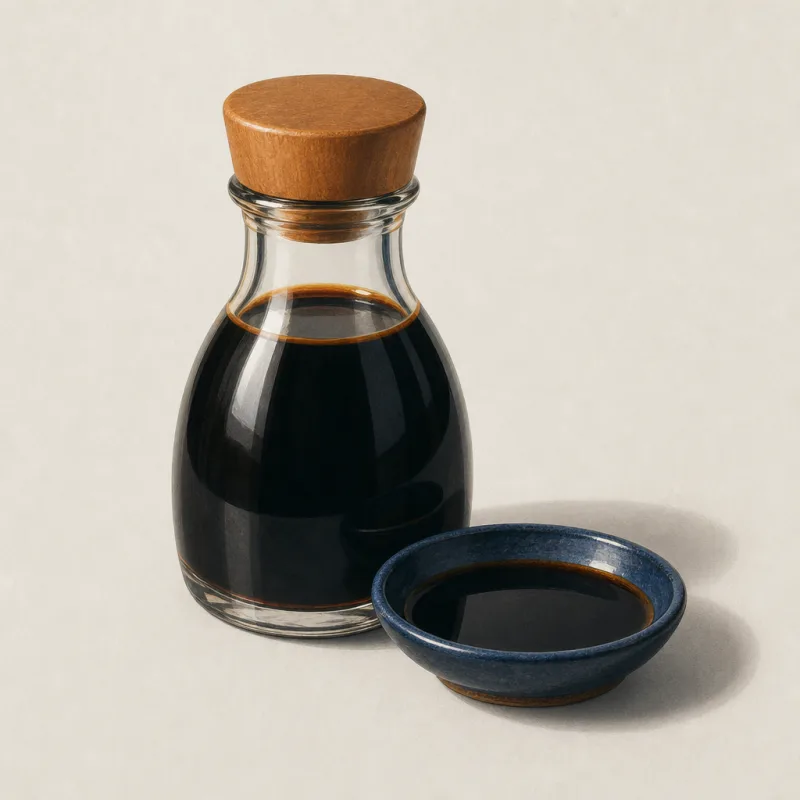
Soy sauce barely spoils thanks to salt and fermentation. Opened and chilled it keeps its full aroma about a year — and stays safe far longer.
Salt and fermentation preserve it
Soy sauce is one of the longest-keeping condiments in the cupboard. Its high salt content and the fermentation it comes from act as natural preservation. Unopened it keeps for many years, often well past the best-before date. Spoiling in the sense of becoming unsafe is barely an issue with soy sauce.
After opening it is less about safety than quality. The sauce stays usable for a long time but loses aroma over time and turns darker and saltier in flavour, as water evaporates and it oxidises. For the best aroma it is worth keeping opened soy sauce in the fridge; there it holds its freshness for about a year. At room temperature it stays safe but ages in flavour faster.
A true sign of spoilage is rare with soy sauce and occurs almost only with contamination — such as food residue getting into the bottle. Then, in isolated cases, mould can form. So always pour the sauce from the bottle rather than dipping a used spoon in, and keep the cap clean. Otherwise soy sauce is remarkably low-maintenance.
There are small differences between types. Classically brewed soy sauce is especially stable thanks to salt and fermentation. Reduced-salt soy sauces or ones with added ingredients such as sugar, fruit content or thickeners are a little more delicate and should be used up sooner after opening and consistently chilled.
How do I spot old soy sauce?
Usually it is about aroma, not spoilage:
The sauce tastes flatter, saltier and less complex than fresh.
Evaporation turns it darker and thicker — usually just a matter of quality.
Fuzzy spots form only with contamination — then discard.
Shelf life at a glance
Safety and aroma diverge widely:
| State | Shelf life |
|---|---|
| Unopened | many years |
| Opened, chilled | about 1 year best aroma |
| Opened, room temperature | safe, ages faster |
| Contaminated/mould | discard |
Store it right
This keeps soy sauce most aromatic:
Chill after opening — the fridge preserves the aroma longest.
Seal tightly — protects against evaporation and oxidation.
Pour cleanly — no food residue or used spoons in the bottle.
Store dark — light speeds up aroma loss.
Common myths
A few myths surround soy sauce:
Not strictly necessary, but recommended for the best aroma.
Hardly — salt and fermentation preserve it for a very long time.
No — evaporation just makes it darker and more intense in flavour.
The white sediment or fine crystals that form in some soy sauce are harmless: usually salt or components of the fermentation. They affect neither safety nor flavour. It only becomes a real problem with visible, fuzzy mould — and that practically only forms from outside contamination. A glance at the type pays off too: classically brewed soy sauce such as shoyu or tamari matures over months and brings a complex aroma, while cheap chemically produced versions often taste flatter. Both keep very long thanks to the high salt content. If you use soy sauce only rarely, choose a smaller bottle so the contents are used up while the aroma is still fresh.