Pesto
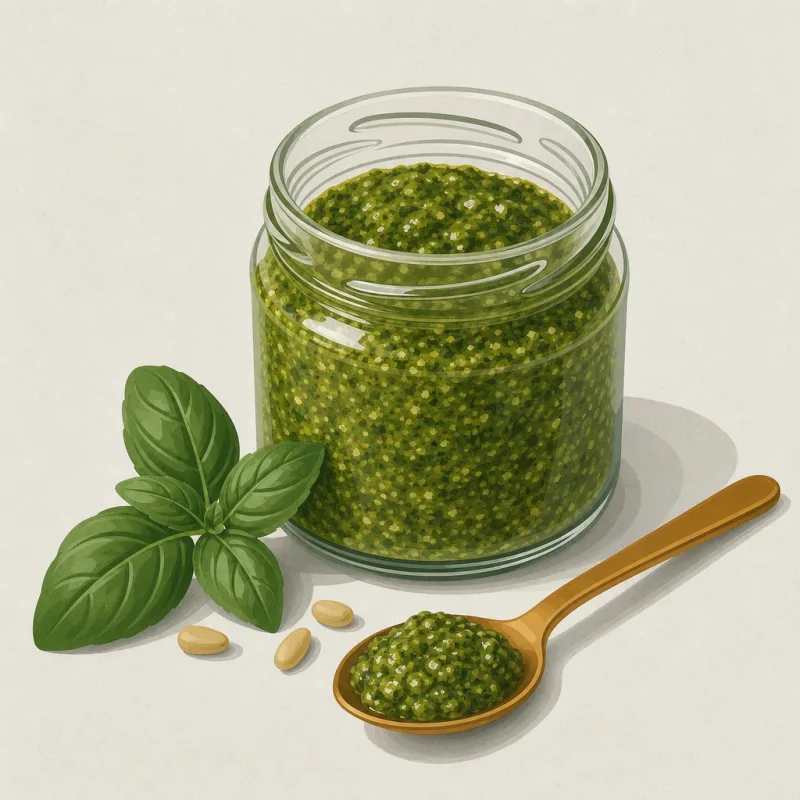
Opened pesto lasts about 1 to 2 weeks in the fridge if the surface is covered with oil. Homemade only 3 to 5 days.
Opened 1–2 weeks, under a layer of oil
How long pesto lasts depends heavily on whether it is store-bought or homemade and whether it is opened. Shelf-stable jarred pesto from the ambient aisle keeps for months, thanks to heating and a high oil content, and carries a best-by date. Refrigerated pesto from the chilled section, by contrast, carries a shorter use-by date.
Once the jar is opened, the math changes. Opened pesto belongs in the fridge and lasts there about one to two weeks. The key is to keep the surface always covered with a thin layer of oil: the oil seals the paste airtight and protects against drying out and mold. After each use, smooth the surface and top up with a little olive oil if needed.
Homemade pesto is much more delicate, because it is neither heated nor preserved and contains fresh ingredients like basil, garlic and nuts. It should be used up within three to five days. To keep it longer, freeze it in portions — for example in ice-cube trays. The cheese and nuts it contains survive freezing well.
With any pesto: always use a clean spoon and never eat straight from the jar or dip in with the used pasta spoon. Bread crumbs, saliva or pasta water introduce germs that sharply shorten shelf life and encourage mold. A cleanly handled jar lasts much longer than one that has been repeatedly poked in.
Take a little pesto on a clean spoon and smell it. Fresh pesto smells strongly of basil, oil and cheese. If it smells rancid, sour-fermented or sharp, it has spoiled. If you see mold spots or bubbles on the surface, the whole jar goes in the trash — mold in pesto cannot simply be skimmed off.
Shelf life at a glance
Production and storage decide:
| State | Shelf life |
|---|---|
| Jar unopened (shelf) | months, to best-by |
| Opened, chilled, under oil | 1–2 weeks |
| Homemade, chilled | 3–5 days |
| Frozen | several months |
Store it right
This keeps pesto fresh longer:
Chill once opened — always put it in the fridge after opening.
Cover with oil — top the surface with a thin layer of olive oil.
Clean spoon — never dip in with the used pasta spoon.
Freeze — in portions in ice-cube trays for a supply.
Common myths
A few myths surround pesto:
No — once opened it is only one to two weeks in the fridge.
No — in pesto the spores run through the whole paste; throw it all out.
No — without heating and preserving, only three to five days.
The protective oil layer is the simplest trick for longer shelf life: it seals the paste airtight and prevents oxygen from browning the basil and starting mold. After each use it pays to smooth the surface and pour on a splash of olive oil — that keeps the green pesto looking fresh too. If you make homemade pesto in bulk, leave out the cheese at first and stir it in fresh just before serving — that keeps the paste more stable and freezes better. A clean spoon at every use remains the single most important protection against early spoilage.