Hummus
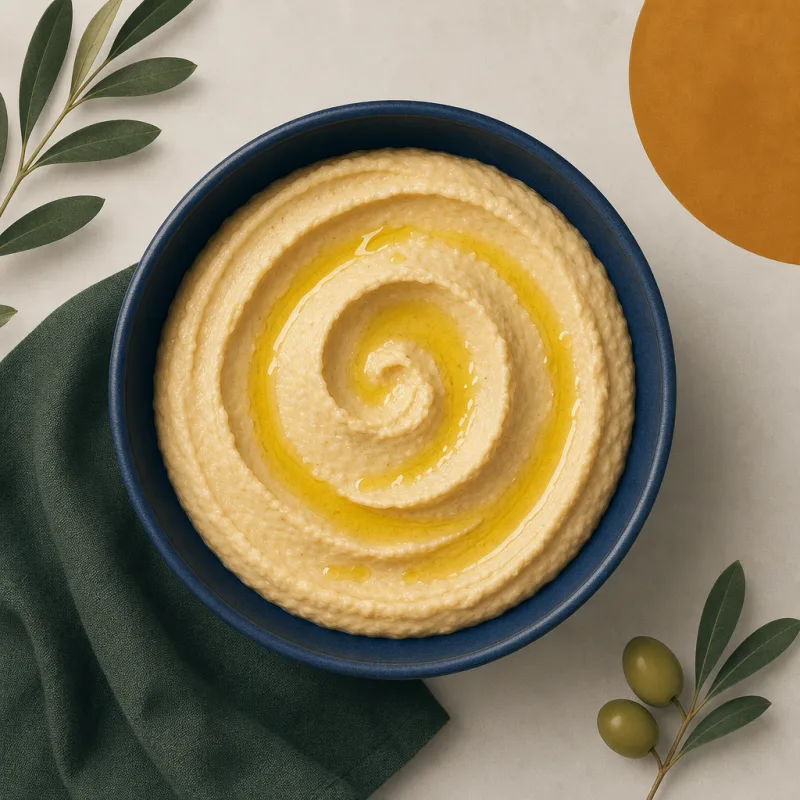
Store-bought hummus keeps 4 to 7 days opened and refrigerated, homemade 3 to 4. A sour smell or mould means: discard it.
A fresh product with a short window
Hummus is a fresh spread made from chickpeas and needs constant refrigeration. Store-bought hummus keeps unopened to the printed use-by date. Once opened it lasts about four to seven days in the fridge; homemade hummus without preservatives only three to four days.
Because hummus is moist and rich in protein and starch, it offers germs good conditions. So clean handling matters: always use a fresh spoon and do not dip bread or vegetables straight into the tub if you want to keep leftovers. Do not leave opened hummus at room temperature for long, especially not on a buffet or at a picnic.
Spoilage in hummus shows through smell and appearance. Fresh hummus smells mild of chickpeas, sesame and garlic. If it turns sour, fermented or alcoholic in smell, forms fuzzy mould spots or the surface bubbles and domes, it should be discarded. A little water separation or a thin oil layer on top, by contrast, is normal and stirs back in.
To keep hummus longer, you can freeze it. Frozen it lasts three to four months. A proven trick against drying out in the fridge is to cover the surface with a thin layer of olive oil; that keeps the hummus moist and creamy and additionally shields it from air contact.
How do I spot bad hummus?
Spoiled hummus gives itself away through smell and surface:
Instead of mild chickpeas it smells sour or alcoholic — then it has spoiled.
Fuzzy white, green or pink spots mean: discard it entirely.
A bubbling or domed surface shows fermentation.
Smell the hummus and look at the surface. Fresh hummus smells mild of chickpeas and sesame. If it smells sour, fermented or alcoholic, shows fuzzy spots or the mass bubbles, it has spoiled — then throw it out. A little separated water or a thin oil layer on top, by contrast, is normal and simply stirs in.
Shelf life at a glance
Store-bought or homemade makes the difference:
| Type | Shelf life |
|---|---|
| Store-bought, unopened | to the use-by date |
| Store-bought, opened, chilled | 4–7 days |
| Homemade | 3–4 days |
| Frozen | 3–4 months |
Store it right
This keeps hummus fresh longest:
Keep refrigerated — hummus belongs in the fridge at all times.
Clean spoon — never dip straight from the tub if leftovers remain.
Protect the surface — a thin oil layer keeps the surface moist and fresh.
Do not leave it warm — keep it cool at a buffet or picnic.
Common myths
A few myths surround hummus:
No — as a moist fresh product it is quite delicate and quick to spoil.
No — a little separated water or oil is normal, just stir it in.
You can — it freezes; after thawing stir it briefly and mix in a little oil if needed.
Hummus freezes well and then keeps three to four months. Best in small portions in little containers, with a little space at the top, as it expands when freezing. After slow thawing in the fridge, stir briefly and mix in a splash of olive oil or water if needed to make it creamy again.