Cream Cheese
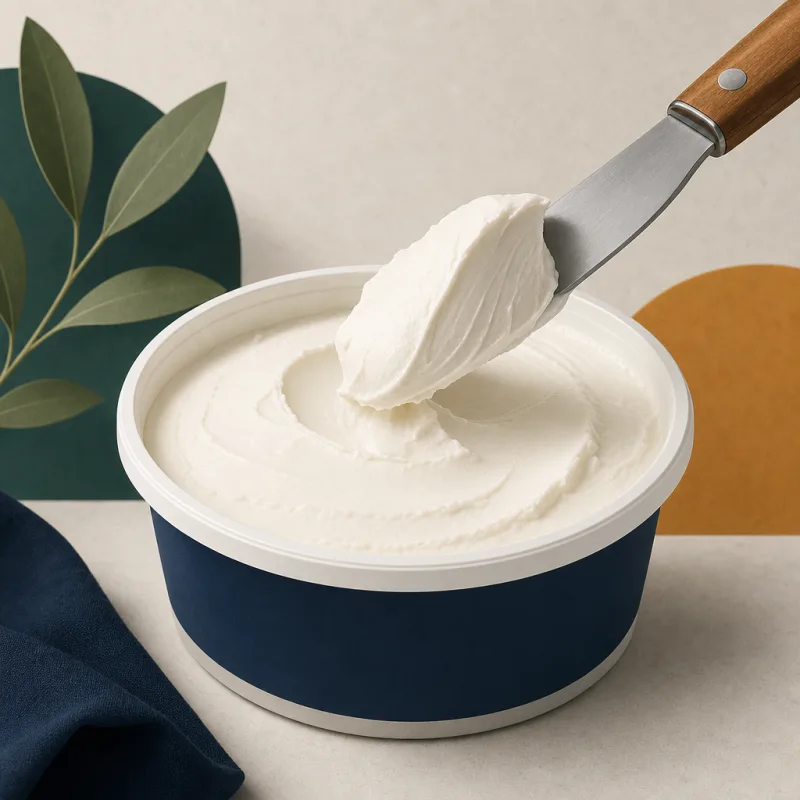
Opened cream cheese keeps about 2 weeks in the fridge, and unopened to its printed date and often a few days beyond.
Why cream cheese is more delicate
Cream cheese is one of the moister, more perishable cheeses, so it keeps far less time than hard or semi-soft cheese. Opened and kept continuously cold, it stays fresh for about two weeks. Unopened, go by the printed date — it is usually fine a few days beyond too, as long as the tub and lid are intact and it has been kept cold.
Its high moisture makes cream cheese a good home for microbes and mould. Clean handling is therefore key: always use a clean spoon or knife, and never dip used cutlery — or a finger — into the tub. That keeps out crumbs and bacteria that would spoil it faster, and with this simple habit it often reaches the top of the range.
There are differences between types: spreadable cream cheese behaves similarly, while cottage cheese is a little more delicate and should be used up quickly. Cream cheese does not freeze well — after thawing it often turns crumbly and watery and is then only good for cooking and baking, not as a spread.
How fast to use a tub depends on the type too: cream cheese with herbs or vegetables often spoils a little faster than plain, because the add-ins bring extra moisture and microbes. If you rarely need cream cheese, buy smaller tubs. And for baking cheesecake or creams, a tub that still tastes fine but is no longer perfectly fresh gets used up nicely — so less ends up wasted.
How do I spot bad cream cheese?
Spoiled cream cheese shows clear signs:
Spots or fuzz in green, blue or pink. Cream cheese with mould should be discarded whole, not just the spot.
A sharp, sour or fermented smell means spoiled. Fresh cream cheese smells mildly milky.
Clear liquid separation, yellowing at the edge or a bitter taste all point to discarding it.
Shelf life at a glance
State and type decide how long it keeps:
| State | Shelf life |
|---|---|
| Unopened, refrigerated | to date + a few days |
| Opened, refrigerated | about 2 weeks |
| Cottage cheese, opened | a few days |
| Frozen | not recommended |
Store it right
The right storage keeps cream cheese fresh longer:
Always clean cutlery — never a used spoon or finger in the tub; that adds bacteria.
Seal tightly — close the lid firmly so it does not dry out or pick up odours.
Keep it cold — on an inner shelf, not the door, where it is coldest.
Use it up promptly — cottage cheese especially, as it is the most delicate.
Common myths
A few myths surround cream cheese:
No — unlike hard cheese, the mould runs through the moist mass. Discard the whole tub.
Not necessarily — a little whey is normal; pour it off or stir it in. Only a strong smell or mould is a stop.
Better not — it turns crumbly and watery. Once thawed, only good for cooking.
Cream cheese that still tastes fine but is no longer perfectly fresh cooks up beautifully — in sauces, dips, bakes or cheesecake. That way an opened tub goes into the next dish rather than the bin.