Vodka
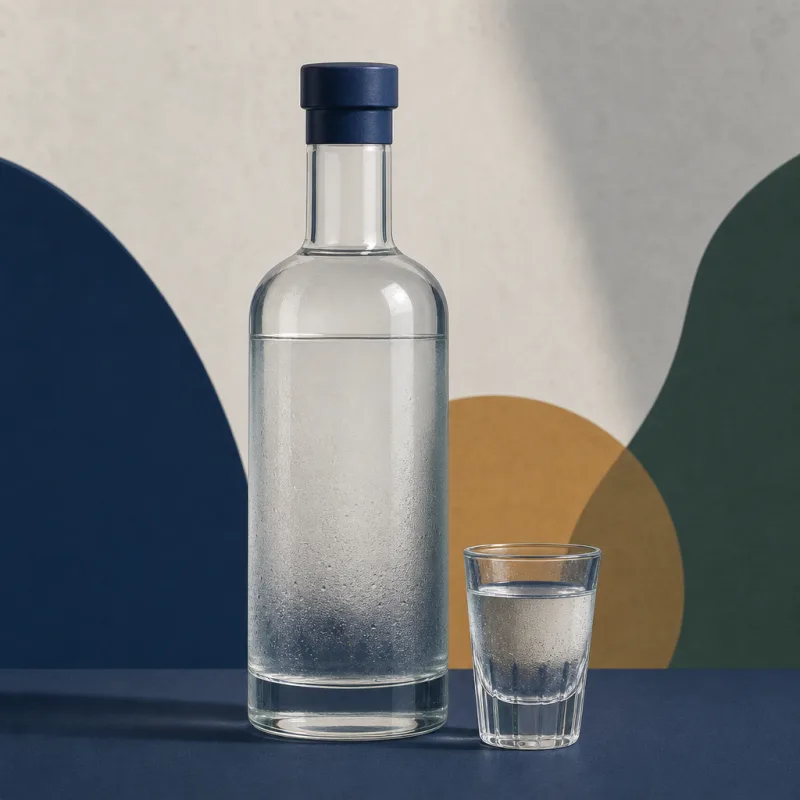
Vodka keeps practically forever thanks to about 40% alcohol — opened or unopened. It carries no best-before date.
The longest-lasting drink in the cabinet
Vodka is perhaps the longest-keeping drink of all. At around 40 percent alcohol it sits well above the 10 percent mark and therefore — like all spirits — carries no best-before date under EU law. The high alcohol content makes it an environment where no microbes survive, and preserves it indefinitely.
Unopened and stored upright, vodka keeps for decades without changing. Because vodka is a very neutral, low-aroma distillate, even opened bottles show barely any loss of flavour — unlike aromatic whiskey or gin. In practice that means an opened bottle of vodka is still perfectly drinkable years later.
Still, a few rules apply: like all high-proof spirits, vodka belongs stored upright so the strong alcohol does not attack the cork (with a screw cap this is a non-issue anyway). Cool and dark preserves its clarity, and a tightly closed cap stops alcohol slowly evaporating. Vodka in the freezer is a matter of enjoyment, not shelf life — cold, it feels silkier.
Thanks to its longevity, vodka is especially good for stocking up and for homemade infusions: steep vanilla pods, lemon peel or herbs in vodka and you get a flavoured infusion that keeps for months. For such home-flavoured versions, though, the shorter shelf life of the ingredients applies — with fruit pieces or fresh herbs, keep the infusion cool and strain it after a few months. Plain, unflavoured vodka, by contrast, stays practically unlimited as long as the bottle is sealed and cool, and never poses a safety risk. So whoever uses vodka for mixing need never worry that a bottle opened months ago has gone bad — unlike almost every other kitchen staple.
How do I spot old vodka?
Vodka barely changes — real warning signs are rare:
Vodka practically does not spoil; stored properly, there is no safety risk.
If the cap is not tight, alcohol evaporates over years; the vodka then tastes more watery.
Foreign particles or cloudiness in an otherwise clear bottle point to contamination — then better discard it.
Shelf life at a glance
Only flavoured varieties set a real limit:
| State | Shelf life |
|---|---|
| Unopened, upright | practically unlimited |
| Opened, sealed | many years |
| Flavoured vodka | 1–2 years (aroma fades) |
| In the freezer | enjoyment, not shelf life |
Store it right
Even the longest-lasting drink benefits from a little care:
Store upright — high-proof alcohol attacks a lying cork.
Cool and dark — preserves clarity and prevents aroma changes in flavoured types.
Seal tightly — so no alcohol evaporates and the vodka does not turn watery.
Drink flavoured ones sooner — fruit or herbal vodka loses its aroma faster than plain.
Common myths
A few myths surround vodka:
Practically not — the high alcohol preserves it permanently. Only flavoured types lose their aroma over time.
No — even opened it keeps for years without trouble.
That is a matter of taste, not shelf life — cold it feels smoother, but does not last longer.
Beyond the glass, vodka has other talents: as an odourless high-proof spirit it works for making extracts like vanilla, as a base for homemade liqueurs, or even as a stain remover and glass cleaner around the house. So an old bottle rarely goes unused.