Frozen Meat
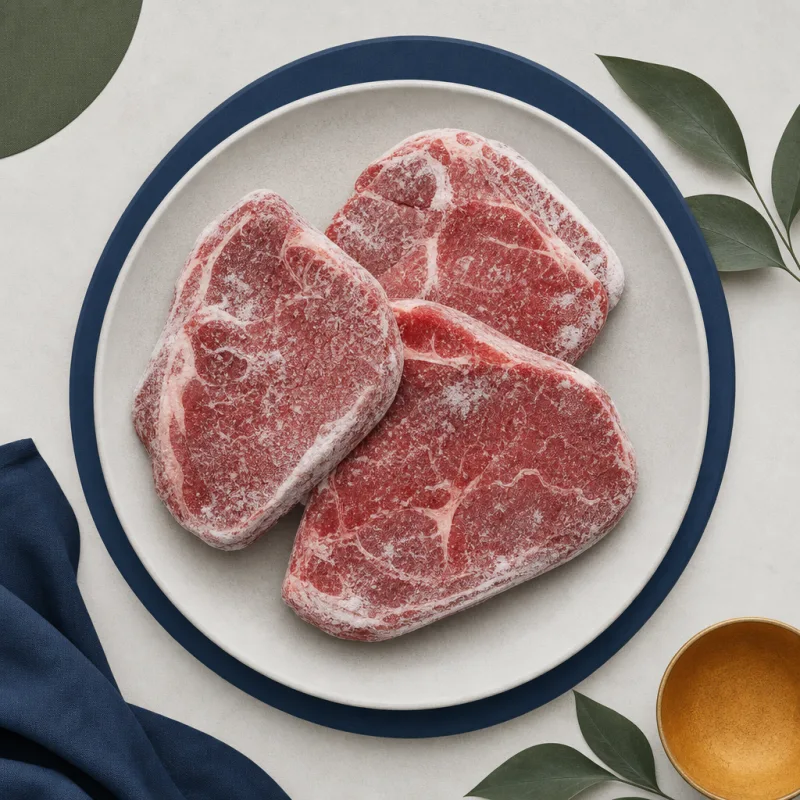
Frozen at 0 °F meat is safe practically forever, but quality lasts only 3 to 12 months depending on the cut. Ground meat is shortest.
Safe almost forever, quality limited
With frozen meat you must separate two things: safety and quality. At a steady 0 °F (−18 °C) all microorganisms are dormant; meat is then safe practically forever and does not become unsafe. What suffers over time is quality — flavour, juiciness and texture decline.
How fast quality fades depends on the cut and fat content. Fatty meat turns rancid faster, because fat slowly oxidises even when cold. As guidelines: ground meat and sausage one to three months, fatty pork four to six months, lean beef and chicken parts six to twelve months, whole poultry up to a year.
The typical quality loss is freezer burn: dry, greyish-white patches on the surface where the meat has lost moisture. Freezer burn is not harmful to health but makes the affected spots tough and flavourless — you can cut them away generously. It is prevented by airtight packaging, ideally vacuum-sealed or in special freezer bags with the air pressed out.
Care matters when thawing. Meat thaws most safely slowly in the fridge, not at room temperature, where germs can already multiply on the warmer surface while the core is still frozen. The thaw juices should be caught and kept away from anything eaten raw.
How do I spot bad frozen meat?
Tell quality loss apart from true spoilage:
Dry, greyish-white patches — harmless, but tough and bland; cut them away generously.
Thick ice layers point to temperature swings and quality loss.
A musty or rancid smell instead of neutral: then do not use it.
Look closely at the thawed meat. Even colour and a firm, juicy structure indicate good quality. Dry, greyish-white or leathery patches are freezer burn — harmless but tough; cut them away generously. A musty, rancid or clearly changed smell after thawing, by contrast, is a real warning sign — then do not use the meat.
Quality shelf life at 0 °F
The fattier the meat, the shorter the good quality:
| Cut | Quality |
|---|---|
| Ground meat, sausage | 1–3 months |
| Fatty pork | 4–6 months |
| Lean beef, chicken parts | 6–12 months |
| Whole poultry | up to 12 months |
Store it right
This preserves quality longest:
Wrap airtight — vacuum-seal or press air from the bag against freezer burn.
Label the date — note the freezing date and use the oldest first.
Steady 0 °F — avoid temperature swings, store at the back.
Thaw in the fridge — slow and safe, catch the thaw juices.
Common myths
A few myths surround frozen meat:
Safe yes, but quality drops — after the guideline times it tastes noticeably worse.
No — just dry and tough; simply cut the affected spots away.
Raw, better not; cook it first, then the cooked dish may be refrozen.
Thawed raw meat should not simply be refrozen, because every thaw gives germs a chance and lowers quality. If you thawed too much, fry or cook it and then freeze the finished dish — that way nothing is lost and safety is kept. Freezing in portions helps too: then you thaw only as much as you really need and never have to refreeze partly thawed leftovers.