Champagne
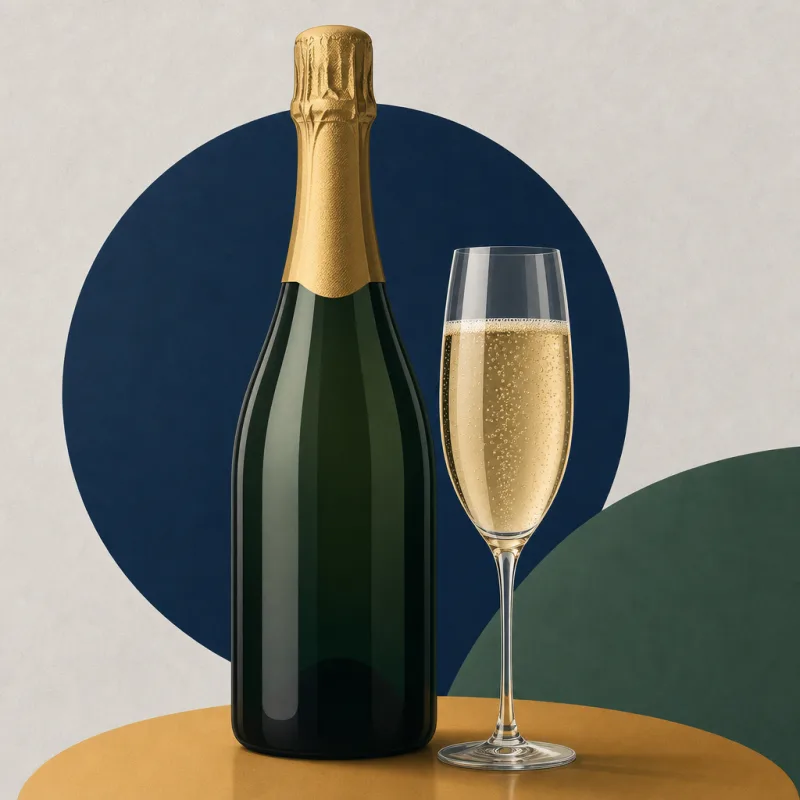
Opened champagne loses its bubbles after 1 to 3 days. Unopened it carries no date and keeps years — non-vintage best young, vintage longer.
Not spoilage, but the bubbles
Champagne and other sparkling wines sit at around 11 to 12 percent alcohol, above the 10 percent mark, and so — like wine — carry no best-before date. Spoiling in the strict sense is barely the issue with sparkling wine. The real question is: how long do the bubbles, the signature carbonation, last?
Unopened, the shelf life depends on the style. Non-vintage champagne and everyday sparkling wine taste best young and should be drunk within one to three years — over time they lose freshness and fizz. Vintage champagne is more robust and can age for several years, sometimes decades. Stored cool, dark and undisturbed, the carbonation is preserved longest.
Once the bottle is open, the carbonation escapes fast. Without a stopper the wine is often flat within hours; with a good champagne stopper the bubbles hold in the fridge for one to three days. The wine stays drinkable longer, but without bubbles it tastes flat — so for full enjoyment it is not safety that counts, but the fizz.
How do I spot old champagne?
With sparkling wine, the carbonation matters most:
If no bubbles rise when you pour, the carbonation has escaped — the wine tastes flat.
Old, over-aged sparkling wine seems tired, loses fruit and freshness and can take on a slightly stale note.
Clearly darkened, brownish wine is over the hill. Then it is best not used as an aperitif.
Pour a small glass and look closely: if fine bubbles rise steadily and a bead forms at the rim, the wine is lively and good. If the glass stays still and flat, the carbonation has escaped — then it is fine for cooking, but no longer a sparkling aperitif.
Shelf life at a glance
Unopened it is the style, opened it is the bubbles:
| State | Shelf life |
|---|---|
| Non-vintage, unopened | 1–3 years |
| Vintage champagne, unopened | several years |
| Opened, with stopper | 1–3 days (chilled) |
| Opened, no stopper | a few hours |
Store it right
This keeps the bubbles as long as possible:
Cool and dark — heat and light age sparkling wine faster.
Undisturbed — stillness protects the fine carbonation.
Use a stopper — keeps an opened bottle fizzy for one to three days.
Serve ice-cold — cold wine holds its bubbles longer than lukewarm.
Common myths
A few myths surround champagne:
A kitchen myth — a spoon does nothing. Only a tight champagne stopper holds the carbonation back.
Non-vintage does not — it is best young. Only quality vintage champagne ages well.
Not so — it is still safe and great for cooking, such as in risotto or sauces.
Store sparkling wine on its side or upright? For short-term storage at home, upright is perfectly fine. Only if you keep cork-sealed bottles for years do you lay them down, so the cork stays moist and tight. For everyday sparkling wine drunk within months it makes no difference — the key is simply to keep the bottle cool and still. One more tip for opening: do not pop the cork with a loud bang, but let it ease out quietly. That keeps more carbonation in the glass, so the precious bubbles are not largely lost at the very moment of opening.